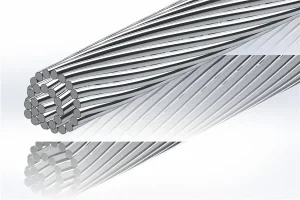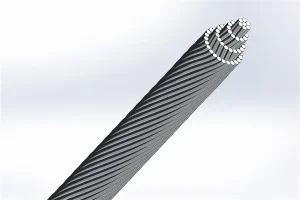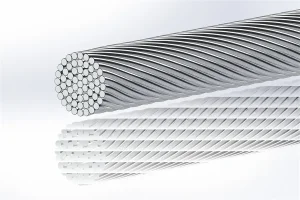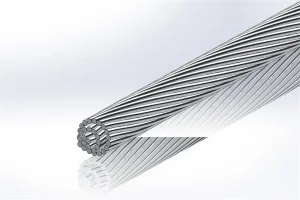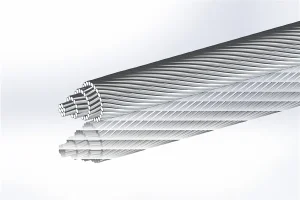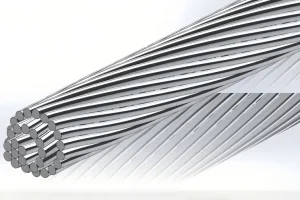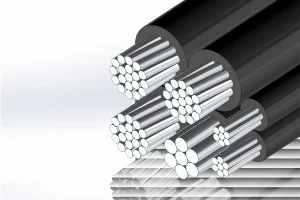
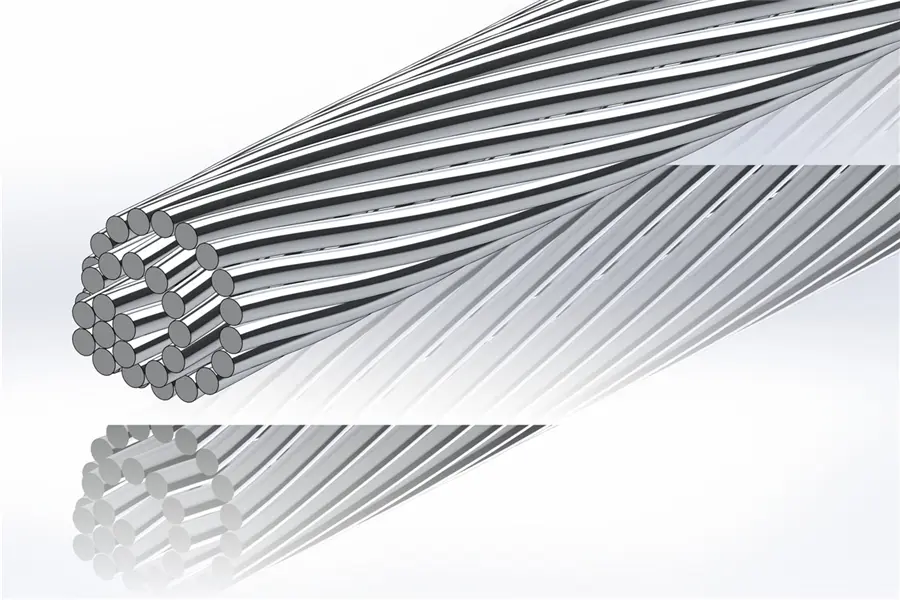
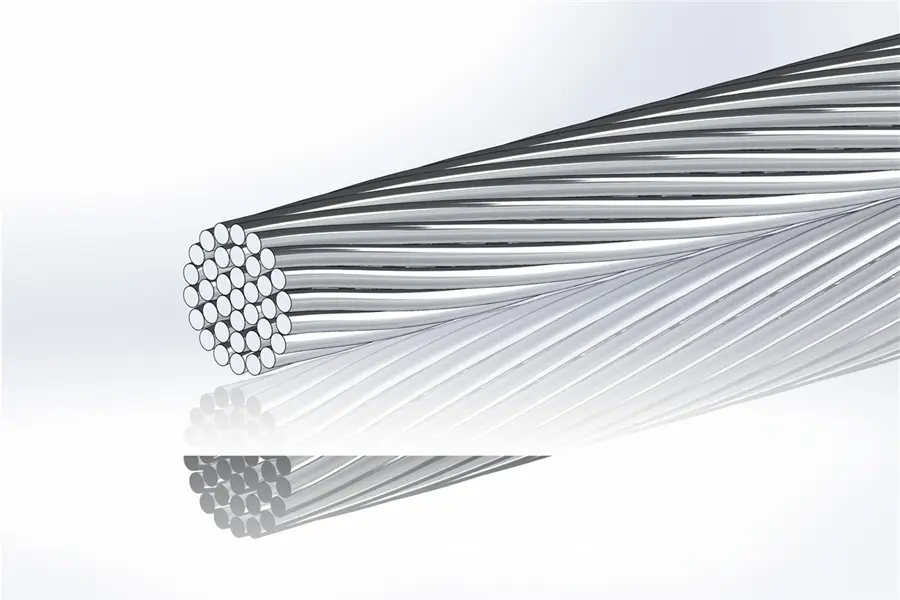
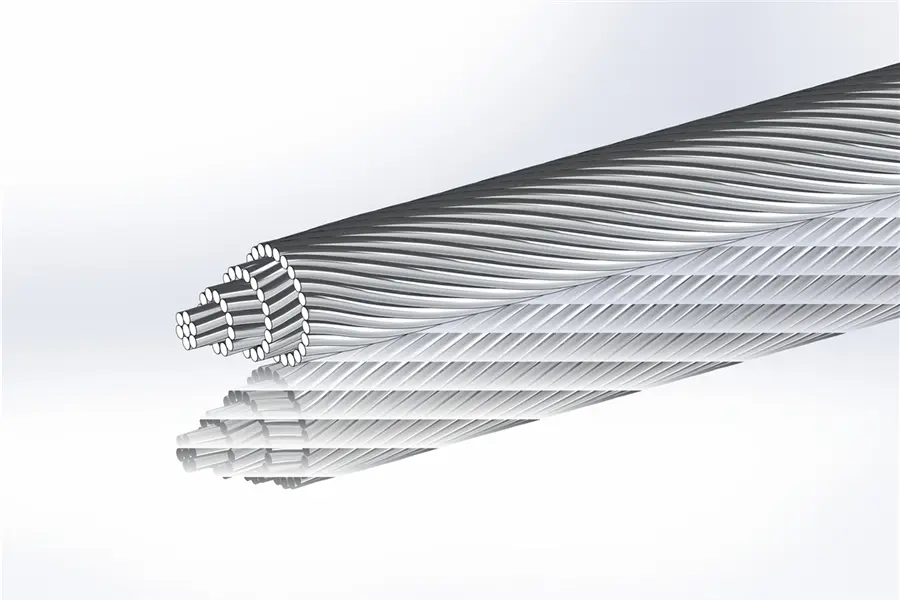
China AAAC EN 50182 DIN 48201 All Aluminum Alloy Conductor Manufacturer, Exporters

Execution standard: BS EN 50182  (Old Standard: DIN 48201)

Material: AAAC adopts 6201-AL3 aluminum-magnesium-silicon alloy material.

Product advantage:
Thanks to their high strength, aluminum alloy stranded conductors reduce the number of towers needed during installation, cutting down costs associated with tower materials and land usage effectively.

AAC (All-Aluminum Alloy Conductor) is a robust transmission solution crafted entirely from high-strength aluminum alloy.  It balances superior conductivity with enhanced mechanical resilience, resisting corrosion and fatigue effectively—ideal for medium to high-voltage lines in coastal, industrial, or harsh weather zones.

Product Description

AAAC Standard: EN 50182 (Old Standard: DIN 48201)
Type: AL3
Aluminum Alloy Conductor (AAAC)
Code Name Old Code Name Sectional Area Wire Diameter & Stranding Overall Diameter Nominal Breaking Load Linear Mass Max Resistance (20℃) Modulus of Elasticity Linear Expansion Coeff. Current Capacity
mm² mm No. mm kN kg/km Ω/km N/mm² 1/K A
16-AL31615.91.775.14.6943.52.0701600002.3x10-5105
24-AL32524.22.176.37.1566.41.3566600002.3x10-5135
34-AL33534.42.577.510.1494.10.9572600002.3x10-5170
49-AL35049.537914.6135.50.6647600002.3x10-5210
48-AL35048.31.819914.26133.00.6841570002.3x10-5210
66-AL37065.82.11910.519.41181.10.5026570002.3x10-5255
93-AL39593.32.51912.527.51256.60.3546570002.3x10-5320
117-AL3120117.02.8191434.51321.90.2827570002.3x10-5365
147-AL3150147.12.253715.7543.4405.80.2256570002.3x10-5425
182-AL3185181.62.53717.553.58500.90.1827570002.3x10-5490
243-AL3240242.52.256120.2571.55669.90.1373550002.3x10-5585
299-AL3300299.42.56122.588.33827.00.1112550002.3x10-5670
400-AL3400400.12.896126.01118.041105.20.0832550002.3x10-5810
500-AL3500499.83.236129.07147.451380.50.0666550002.3x10-5930
626-AL3625626.22.969132.56184.731730.50.0534550002.3x10-51075
802-AL3800802.13.359136.85236.622216.60.0417550002.3x10-51255
1000-AL31000999.73.749141.14294.912762.80.0334550002.3x10-51450
Technical Notes:
⚙️
The outermost layer is twisted to the right (Z direction).
📊
Elastic and expansion coefficients in this table are specific to German standards. Other conductor structures should refer to IEC61597 for calculations.
Current flow values are calculated based on: 60Hz frequency, 0.6m/s wind speed, solar exposure, 35℃ ambient temperature, and 80℃ conductor temperature. In non-convection conditions, values may decrease by up to 30%.
Frequently Asked Questions
What is the difference between EN 50182 and DIN 48201 standards?
EN 50182 is the current European standard for conductors for overhead lines, which has superseded the older DIN 48201 German standard. While they cover similar specifications, EN 50182 provides updated technical requirements and testing procedures for modern power grids.
Why is the outermost layer of the AAAC conductor twisted to the right (Z)?
The "Z" twist direction for the outermost layer is a standard industry practice to ensure structural stability during installation and to provide uniform mechanical performance when the conductor is tensioned across transmission towers.
What are the primary advantages of using AL3 Aluminum Alloy Conductors?
AL3 alloy conductors offer a superior strength-to-weight ratio compared to standard aluminum. They provide excellent corrosion resistance, lower electrical losses than ACSR in some scenarios, and higher mechanical tension capabilities without the need for a steel core.
How does ambient temperature affect the current-carrying capacity?
The current capacity is calculated at a standard 35℃ ambient temperature. If the ambient temperature increases, the conductor's ability to dissipate heat decreases, which reduces the maximum allowable current to prevent the conductor from exceeding its 80℃ thermal limit.
Can these AAAC conductors be used in coastal environments?
Yes, AAAC conductors are highly recommended for coastal or industrial areas. Because they consist entirely of aluminum alloy (without a steel core), they are naturally more resistant to galvanic corrosion than ACSR conductors.
What is meant by "Modulus of Elasticity" in the data table?
The Modulus of Elasticity (measured in N/mm²) represents the conductor's stiffness. It is a critical value for engineers when calculating the "sag and tension" of the lines during the design phase of overhead power transmission systems.

Related Products