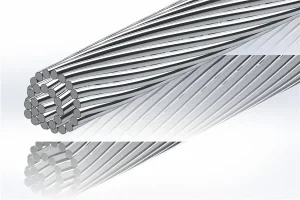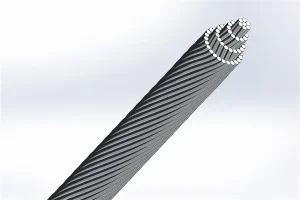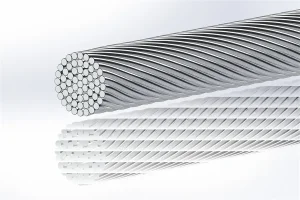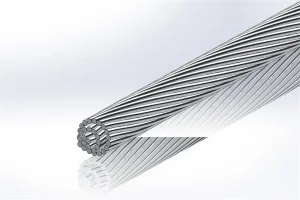
CE Certification AAAC EN 50182 NF C 34-125 All Aluminum Alloy Conductor Manufacturer, Factory

Execution standard: BS EN 50182  (Old Standard: NF C 34-125)

Material: AAAC adopts 6201-AL4 aluminum-magnesium-silicon alloy material.

Product advantage: Compared to copper core cables, aluminum alloy products offer a substantial cost advantage, making them a budget-friendly choice without compromising on performance.
Fully recyclable without losing core properties, aluminum alloy products align with sustainable practices, supporting eco-friendly initiatives and reducing environmental impact.

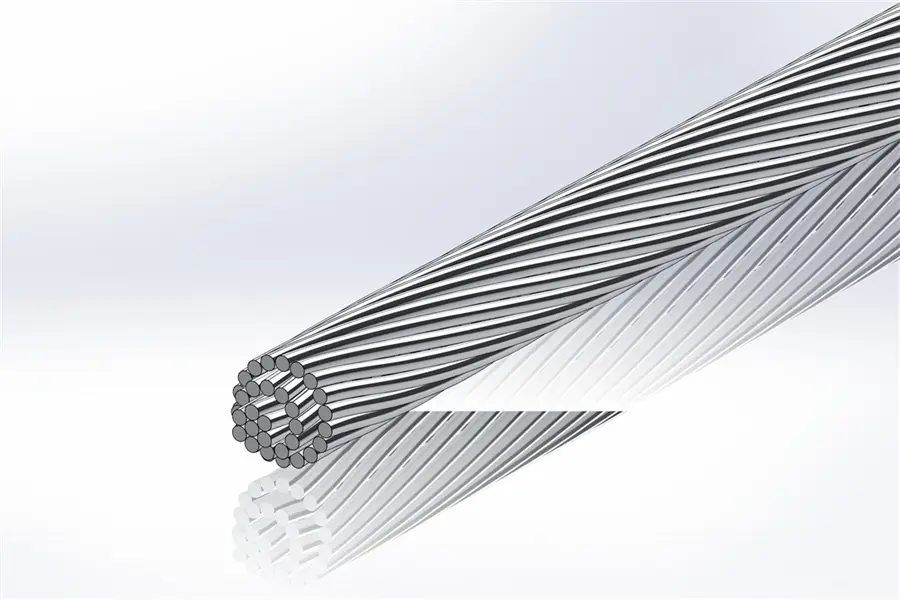
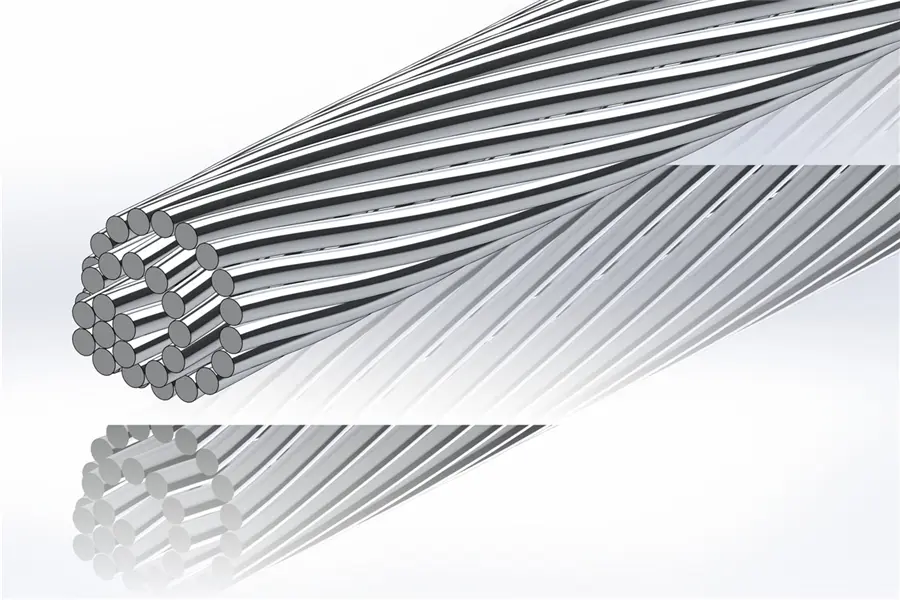
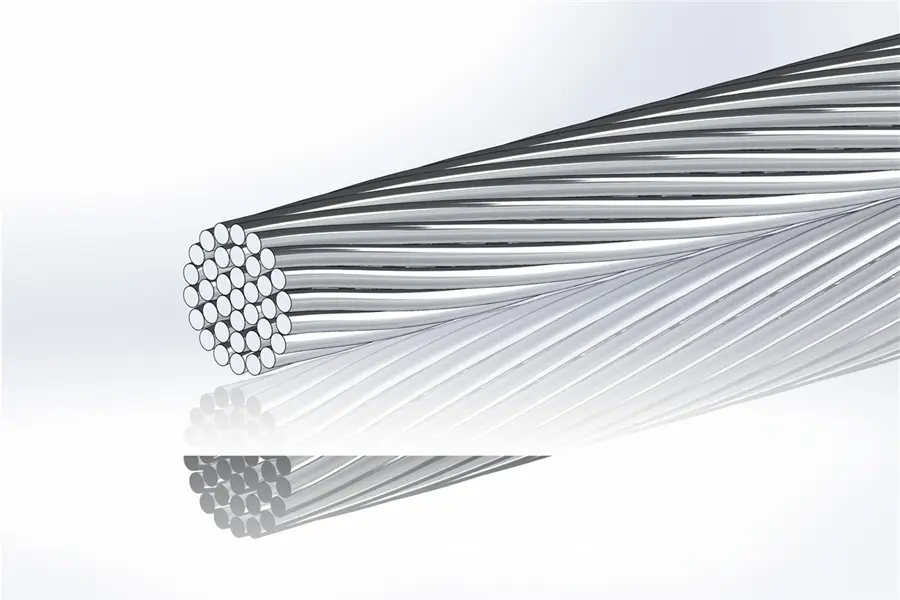
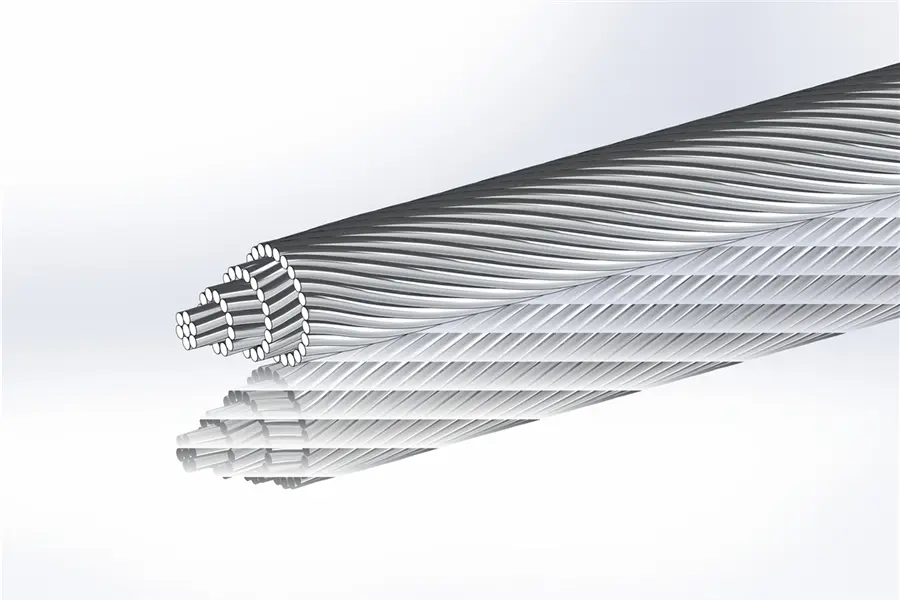
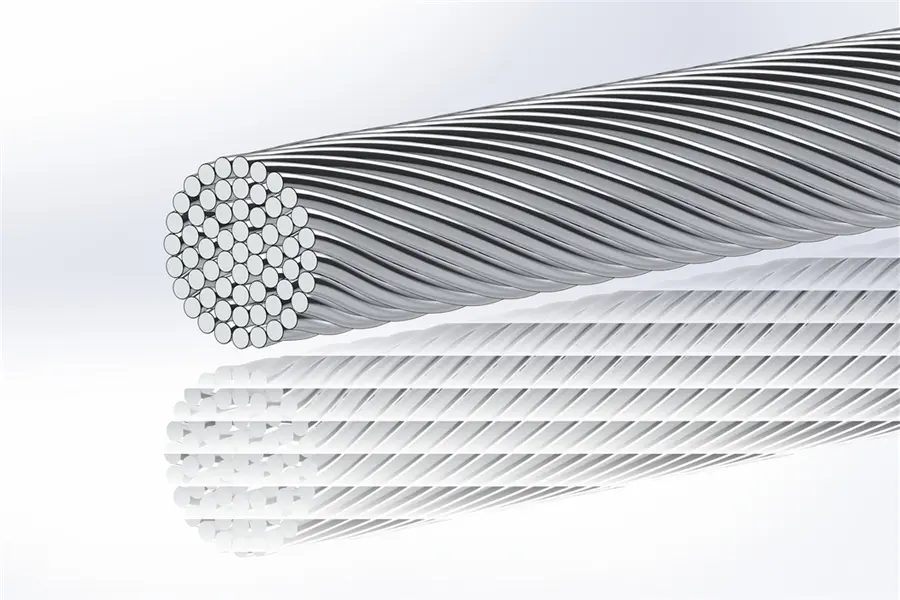
AAAC (All-Aluminum Alloy Conductor) offers a lightweight yet sturdy choice for overhead lines, with its all-alloy build ensuring excellent corrosion resistance.  It excels in areas prone to humidity or chemical exposure, providing reliable electrical flow without the added weight of steel cores, simplifying installation across varied terrains.

Product Description

AAAC Standard: EN 50182 (Old Standard: NF C 34-125)
Type: AL4
Aluminum Alloy Conductor (AAAC)
Code Name Old Code Name Sectional Area Wire Diameter & Stranding Overall Diameter Nominal Breaking Load Linear Mass Maximum Resistance at 20°C Modulus of Elasticity Coefficient of Linear Expansion
mm² mm No. mm kN kg/km Ω/km N/mm² 1/K
22-AL4 ASTER 22 22.0 2.0 7 6 7.15 60.2 1.4989 62000 2.3x10⁻⁵
34-AL4 ASTER 34.4 34.4 2.5 7 7.5 11.17 94.1 0.9593 62000 2.3x10⁻⁵
55-AL4 ASTER 54.6 54.6 3.15 7 9.45 17.73 149.4 0.6042 62000 2.3x10⁻⁵
76-AL4 ASTER 75.5 75.5 2.25 19 11.25 24.55 207.9 0.4388 60000 2.3x10⁻⁵
93-AL4 ASTER 93.3 93.3 2.5 19 12.5 30.31 256.6 0.3551 60000 2.3x10⁻⁵
117-AL4 ASTER 117 117.0 2.8 19 14 38.02 321.9 0.2833 60000 2.3x10⁻⁵
148-AL4 ASTER 148 148.1 3.15 19 15.75 48.12 407.4 0.2239 60000 2.3x10⁻⁵
182-AL4 ASTER 181.6 181.6 2.5 37 17.5 59.03 500.9 0.1831 57000 2.3x10⁻⁵
228-AL4 ASTER 228 227.8 2.8 37 19.6 74.04 628.4 0.1460 57000 2.3x10⁻⁵
288-AL4 ASTER 288 288.3 3.15 37 22.05 93.71 795.3 0.1154 57000 2.3x10⁻⁵
366-AL4 ASTER 366 366.2 3.55 37 24.85 115.36 1010.1 0.0908 57000 2.3x10⁻⁵
570-AL4 ASTER 570 570.2 3.45 61 31.05 185.33 1575.0 0.0585 54000 2.3x10⁻⁵
851-AL4 ASTER 851 850.7 3.45 91 37.95 276.47 2360.6 0.0394 52500 2.3x10⁻⁵
1144-AL4 ASTER 1144 1143.5 4 91 44 360.22 3173.2 0.0293 52500 2.3x10⁻⁵
1600-AL4 ASTER 1600 1595.9 4 127 52 502.72 4427.5 0.0210 50500 2.3x10⁻⁵
Note: The outermost layer is twisted to the Left (S).
Frequently Asked Questions
What is the difference between EN 50182 and NF C 34-125?
EN 50182 is the current European standard for conductors for overhead lines, while NF C 34-125 is the older French standard. Many industry specifications still refer to both to ensure compatibility and identification, especially with code names like "ASTER".
What does "AL4" represent in these AAAC specifications?
AL4 refers to a specific type of aluminum alloy used in the conductor. It defines the mechanical and electrical properties of the alloy, ensuring it meets the required breaking load and resistance standards for overhead power distribution.
Why is the outermost layer twisted to the Left (S)?
The "S" twist direction is a standard configuration for the outer layer of strands. This specific direction is important for consistency during installation and for ensuring proper mechanical behavior under tension.
How does the sectional area affect the conductor's performance?
A larger sectional area, such as the 1600-AL4, provides lower electrical resistance and higher breaking loads, making it suitable for high-capacity long-distance transmission compared to smaller sizes like 22-AL4.
What is the significance of the "ASTER" code names?
"ASTER" is a series of trade/code names originally associated with the NF C 34-125 standard to easily identify specific sizes of aluminum alloy conductors. Each name corresponds to a unique sectional area and stranding configuration.
Are these conductors resistant to thermal expansion?
Yes, these AAAC conductors have a defined coefficient of linear expansion (typically 2.3x10⁻⁵ 1/K), which engineers use to calculate the sag and tension of the overhead lines across different temperature ranges.

Related Products