Why Choose Control Cable for Industrial Applications?

Time:2026-09-15 Author:Oliver
0%

In demanding industrial environments, Control Cable carries the signals that keep machines coordinated, responsive, and measurable. It connects sensors, switches, actuators, control panels, and programmable logic controllers. A stable signal can prevent sudden stops and protect valuable production time. A poor cable choice may create noise, false readings, or difficult maintenance.

Experienced engineers examine more than conductor size. They consider voltage, current, shielding, bending frequency, temperature, moisture, chemicals, and installation distance. In a factory, a cable may run beside variable-frequency drive wiring or bend repeatedly inside a drag chain. These conditions can weaken insulation and disturb sensitive signals. Proper grounding and separation also matter. Small details matter.

Reliable selection should follow the equipment manufacturer’s data and applicable regional standards, such as IEC or UL requirements. Testing should include insulation resistance, continuity, shielding performance, and mechanical flexibility where relevant. Site records can reveal recurring failures, especially near moving equipment or high-heat zones. Still, no cable performs perfectly in every application. That assumption needs questioning. Engineers should verify actual operating conditions instead of copying an older specification. Control Cable offers practical advantages, but only when its construction matches the system’s risks. The right choice supports cleaner signals, easier troubleshooting, safer maintenance, and longer service life. Results depend on installation quality, too. Even an excellent cable can fail when routing, termination, or protection is careless.
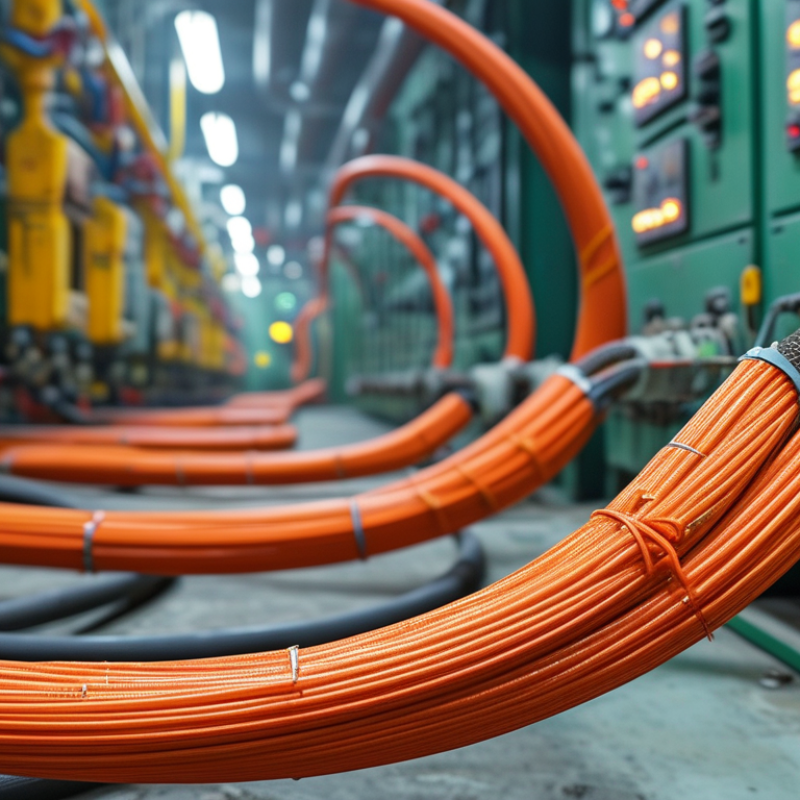
Why Choose Control Cable for Industrial Applications?

What Is a Control Cable and How Does It Work?

Why Choose Control Cable for Industrial Applications?

A control cable carries commands between an operator, controller, and industrial machine. It does not usually deliver the main motor power. Instead, it transmits low-voltage signals for starting, stopping, positioning, or adjusting speed. Inside, copper conductors sit under insulation and protective layers. Each conductor follows a defined circuit path. When a switch changes state, the signal travels through the cable to a relay, drive, valve, or sensor. Simple, but important.

In a factory, a control cable may connect a push button station to a motor control panel. Another cable can link a temperature sensor with an automated controller. The receiving device reads voltage, current, or a changing signal. It then sends an instruction to the equipment.

Shielding can reduce interference from motors and variable-frequency drives. Flexible jackets help cables survive repeated movement near robotic arms or conveyor systems. Correct conductor size, voltage rating, bend radius, and environmental protection must match the installation.

Field experience shows that many failures begin with small details. A loose terminal, sharp bend, or poorly sealed entry can interrupt a reliable signal. Cable labels also fade faster than expected in hot, oily areas. Inspection should include insulation damage, crushed sections, and unstable connections. I would not choose a cable from signal type alone. Noise, temperature, motion, chemicals, and maintenance access matter too. Control cable selection is sometimes less obvious than the wiring diagram suggests. That uncertainty deserves a careful site check before installation.

Key Features of Control Cables for Industrial Systems

Why Choose Control Cable for Industrial Applications?

Key Features of Control Cables for Industrial Systems

Control cables connect sensors, switches, actuators, and control panels across demanding industrial environments. Their design supports accurate signal transmission and stable machine operation.

Flexible stranded conductors tolerate repeated movement near conveyors, robotic arms, and hinged cabinet doors. A suitable bending radius protects the copper from early fatigue. Clear conductor identification also reduces wiring errors during installation and maintenance. Small details matter.

Industrial control cables often include insulation that resists oil, moisture, abrasion, and temperature changes. Shielding helps limit electromagnetic interference from motors, inverters, and power cables. This feature is especially useful when carrying low-voltage signals, such as 24-volt sensor outputs. Unshielded cables may work in quiet areas, but they can create unstable readings near heavy equipment.

Reliable control cables should match the system voltage, current, temperature range, and installation method. Flame-resistant construction can improve safety inside crowded electrical enclosures. Some cables also support drag-chain movement, outdoor exposure, or continuous flexing. Field inspections often show one weakness: installers focus on electrical ratings but overlook mechanical stress. That mistake can shorten service life. No cable is perfect. Even a well-specified cable may fail when pulled too tightly, bent sharply, or exposed beyond its rated conditions. Careful routing and regular inspection remain essential.

How Control Cables Support Reliable Machine Operation

Control cables help machines operate with steady, predictable signals. They connect switches, sensors, actuators, and control panels across demanding industrial environments. A well-selected cable reduces signal interference and supports accurate movement, timing, and feedback.

In daily maintenance work, cable routing often matters as much as cable construction. Sharp bends can damage internal conductors over time. Repeated movement may create hidden fatigue near connectors. Shielded designs can limit electrical noise near motors and variable-speed drives. Flexible jackets also help cables withstand vibration, oil splashes, dust, and changing temperatures. Still, cable choice is not always perfect. A cable may meet its rating but fail when the actual bend radius is ignored. That mistake is easy to make.

Tips: Check voltage, current, temperature, and movement requirements before installation. Measure the minimum bend radius carefully. Keep control cables separated from high-power wiring where practical. Secure long runs without crushing the jacket. Inspect for flattened sections, cracked insulation, loose terminals, and unexpected signal changes. Test continuity during scheduled maintenance, not only after a machine stops. Small checks can prevent unstable operation.

Factors to Consider When Choosing an Industrial Control Cable

Control cable is chosen for more than signal transfer. It must preserve stable communication beside motors, drives, relays, and sensors. The U.S. Department of Energy’s Motor Systems Market Assessment reports that motor-driven equipment uses about 70% of industrial electricity in the United States. That makes cable reliability an energy and safety concern. The details matter.

Start with voltage, current, conductor size, and insulation temperature. Then examine the installation path. A cable inside a moving chain needs a smaller bending radius and tested flex performance. Fixed wiring may need stronger mechanical protection instead. Shielding also deserves attention near variable-frequency drives, where electrical noise can disturb feedback signals. In wet, oily, dusty, or chemically exposed areas, the jacket must match the environment. IEC 60227, IEC 60245, and IEC 60502 provide useful insulation and construction references, but a standard alone cannot replace site testing.

Field engineers should also check voltage drop, flame performance, grounding, connector compatibility, and expected service life. The International Energy Agency’s Energy Efficiency 2023 report identifies industry as responsible for nearly 40% of global final energy use, so small reliability losses can spread across large systems. A neat datasheet can still mislead. Temperature ratings may assume ideal airflow, while real trays become crowded. Installation records, bend-cycle data, and maintenance feedback often reveal more. That shortcut fails. Select the cable for the real route, real load, and real maintenance habits—not only the catalog specification.

Control Cable Applications Across Different Industries

Control cable supports precise signal transfer across demanding industrial environments. In manufacturing plants, it connects sensors, PLCs, actuators, emergency stops, and operator panels. The International Federation of Robotics reported 541,302 industrial robots were installed worldwide in 2023. Each automated cell depends on dependable control wiring for timing, feedback, and safe machine coordination. Flexible cables suit moving robotic arms, while shielded designs help reduce electromagnetic interference near variable-speed drives. Small details matter.

Energy facilities use control cable differently. Substations, solar farms, wind turbines, and battery systems require stable connections between monitoring devices and control equipment. The International Energy Agency reported that global energy investment was expected to exceed 3 trillion dollars in 2024, with clean-energy investment reaching about 2 trillion dollars. That expansion increases demand for durable cabling in outdoor, high-temperature, and electrically noisy locations. Cable selection should consider voltage, bending radius, fire performance, oil resistance, and installation conditions. IEC standards can guide these decisions, but standards alone do not replace a site assessment.

Process industries, including chemical, food, and water treatment plants, also rely on control cable for continuous measurement and automated valve operation. Shielding and correct grounding are essential around pumps and motors. Yet cable layouts are often treated as an afterthought. That can create maintenance problems later. A practical specification should include future expansion, labeling, inspection access, and realistic operating temperatures. The cheapest cable may not remain the lowest-cost choice.

Why Choose Control Cable for Industrial Applications? - Control Cable Applications Across Different Industries

Industry Typical Control Applications Why Control Cable Is Suitable Recommended Cable Characteristics Common Installation Considerations
Factory Automation PLC I/O connections, sensors, push buttons, relays, motor starters and machine-control panels. Provides organized multi-core connections for low-power control and signal circuits, helping reduce wiring complexity. Multi-core construction Flexible stranding Clear conductor identification Separate control wiring from high-power conductors where possible to limit electromagnetic interference and simplify maintenance.
Robotics and Motion Systems Robot arms, pick-and-place equipment, automated tooling and moving machine assemblies. Flexible control cables can support repeated movement when their construction and bend radius are matched to the application. Fine-stranded conductors High flex life Abrasion-resistant jacket Use only cables rated for continuous flexing when installed in drag chains or robotic axes; follow the manufacturer’s minimum bend radius.
Material Handling Conveyors, hoists, cranes, warehouse sorters and automated storage systems. Supports control of sensors, limit switches, brakes, interlocks and operator stations across moving or distributed equipment. Mechanical durability Oil resistance Flexible jacket Consider tensile forces, vertical travel, torsion, impact and repeated bending in cable routing and support systems.
Process Manufacturing Valve actuators, pumps, level instruments, temperature sensors and distributed control systems. Enables reliable transmission of control signals in systems that require clear identification and orderly panel wiring. Signal integrity Chemical resistance Shielding options Use shielded constructions for sensitive analog or communication-related signals where electrical noise may affect measurement accuracy.
Energy and Utilities Substation controls, generator auxiliaries, switchgear, protection circuits and monitoring equipment. Offers multiple insulated conductors in one cable, making control cabinets and equipment interconnections easier to organize. Flame-retardant options Low-smoke options High insulation reliability Select voltage ratings, fire-performance characteristics and installation methods according to the applicable electrical code and site risk assessment.
Building Automation HVAC controls, lighting control, access systems, alarms and building-management system interfaces. Provides practical multi-conductor wiring for supervisory signals, equipment status feedback and control commands. Easy termination Low-smoke materials Compact construction Keep control and power circuits properly separated, and verify compatibility with cable trays, conduits and building fire-safety requirements.
Transportation Equipment Rail vehicles, automated transit systems, vehicle doors, braking interfaces and onboard auxiliary controls. Can provide robust signal and control connections where vibration, restricted space and frequent equipment operation are present. Vibration resistance Oil and fuel resistance Low-smoke options Transportation installations may require specialized fire, smoke, toxicity, vibration and environmental qualifications beyond general industrial cable requirements.
Water and Wastewater Treatment Pump controls, valve position feedback, chemical dosing systems, aeration equipment and monitoring instruments. Supports dependable control and instrumentation connections in humid, corrosive and washdown-prone environments. Moisture resistance Corrosion-resistant jacket Shielded signal options Protect cable entries and terminations against water ingress, and select materials compatible with chemicals used at the facility.
Renewable Energy Systems Wind-turbine nacelle controls, solar tracking systems, battery-management auxiliaries and inverter interfaces. Helps connect sensors, actuators and monitoring devices in equipment exposed to vibration, temperature variation and outdoor conditions. UV-resistant options Temperature tolerance Flexibility Verify resistance to ultraviolet exposure, temperature extremes, wind-induced movement and the specific requirements of the equipment manufacturer.
Oil, Gas and Chemical Processing Emergency shutdown systems, process instrumentation, valve controls and monitoring equipment. Allows structured routing of control and instrumentation circuits in complex process facilities. Chemical resistance Flame-retardant options Armored options Hazardous-area installations require equipment and cable systems selected according to the applicable hazardous-location classification and regulations.

FAQS

What is a control cable used for in industrial systems?

It carries low-voltage commands between operators, controllers, sensors, and machines. It can start, stop, position, or adjust equipment.

Does a control cable provide main motor power?

Usually, no. It transmits control signals, while separate power cables supply the motor’s main energy.

How does a control cable transmit a machine command?

A switch changes state, and the signal travels through copper conductors. A relay, drive, valve, or sensor then receives it.

Where might a control cable be installed?

It may connect a push button station to a control panel. Another cable might link a temperature sensor to an automated controller.

Why is shielding useful in a control cable?

Shielding reduces electromagnetic interference from motors, inverters, and power cables. It helps protect small signals, including 24-volt sensor outputs.

What cable features support repeated movement?

Stranded conductors and flexible jackets tolerate movement near robotic arms, conveyors, and hinged cabinet doors. The correct bend radius still matters.

What environmental conditions should be considered during cable selection?

Check temperature, oil, moisture, abrasion, chemicals, and outdoor exposure. Mechanical movement also matters. Electrical ratings alone are not enough.

What common problems can cause control cable failure?

Loose terminals, sharp bends, crushed sections, and poorly sealed entries can interrupt signals. Faded labels may also cause maintenance mistakes.

How should a control cable be inspected?

Look for damaged insulation, unstable connections, crushed areas, and excessive bending. Check cable labels in hot or oily locations.

Can a correctly rated control cable still fail?

Yes. Pulling it too tightly or exceeding its movement and temperature limits can shorten its life. Specifications do not replace a site check.

Conclusion

A Control Cable is designed to transmit electrical signals and commands between control devices, sensors, motors, and other equipment in an industrial system. Its conductors, insulation, shielding, and protective jacket work together to support stable signal transmission while resisting electrical interference, mechanical stress, oil, moisture, temperature changes, and continuous movement. These features help machines respond accurately and maintain dependable performance in demanding operating environments.

When selecting an industrial control cable, users should consider voltage and current requirements, conductor size, flexibility, installation method, environmental conditions, shielding needs, and expected service life. The right cable can reduce signal loss, minimize unplanned downtime, simplify maintenance, and improve overall machine reliability. Control cables are widely used in automation equipment, production lines, robotics, process-control systems, transportation facilities, energy installations, and building-management systems, making them an essential part of modern industrial operations.


Oliver

Oliver

Oliver is a seasoned marketing professional with a wealth of expertise in driving brand awareness and engagement. With a deep understanding of our company's product offerings, he consistently delivers high-quality content that enriches our professional blog. His insights not only shed light on......