Choosing the right Insulated Wire manufacturer can influence safety, efficiency, and long-term project costs. Global buyers often compare more than price. They examine conductor materials, insulation performance, voltage ratings, temperature resistance, and production consistency.
This guide introduces ten manufacturers serving industrial, electrical, automotive, renewable energy, and construction markets. Each company is considered through practical factors, including manufacturing experience, product range, quality systems, testing capability, delivery reliability, and international support. Buyers should look for traceable raw materials, clear technical datasheets, and test reports from recognized laboratories. Factory audits and sample testing can reveal details that online catalogs often miss.
No ranking fits every application. A supplier trusted for flexible control cable may not suit high-temperature equipment. Some manufacturers communicate well but provide limited customization. Others offer advanced products yet require larger minimum orders. These differences matter. They can affect installation time, replacement costs, and compliance reviews.
The comparison also considers certifications and regional standards, but documentation should always be verified for the target market. Product claims may change. Even established suppliers can show uneven performance across factories or product lines. A careful buyer should confirm conductor size, insulation thickness, jacket material, color coding, packaging, and delivery terms before signing a contract.
This is a practical starting point.
Use the list to narrow options, not replace technical judgment. The strongest partnership usually combines proven production capability, responsive engineering support, transparent communication, and consistent quality over multiple orders.
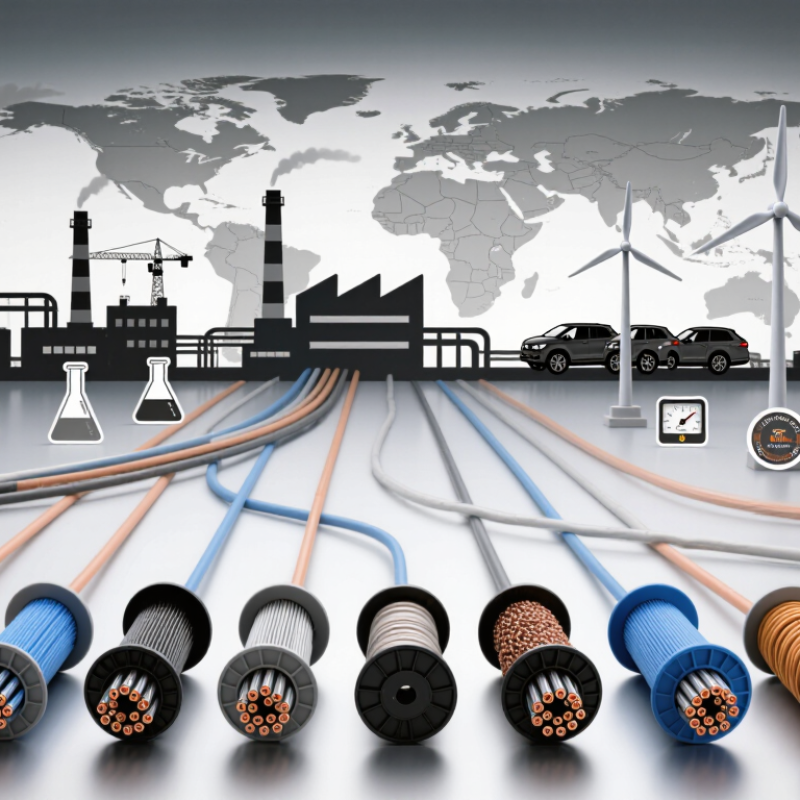
Insulated wire is a metal conductor covered by a protective layer, usually PVC, XLPE, rubber, or another engineered polymer. The conductor carries current. The insulation limits contact, moisture entry, heat damage, and short circuits. In practical terms, it is the colored cable behind a wall, inside a solar inverter, or along an industrial control panel.
Global buyers need reliable insulated wire because electricity networks are expanding quickly. The International Energy Agency’s Electricity 2024 report projects global electricity demand to grow by about 3.4% annually through 2026. More buildings, data centers, renewable systems, and electric equipment require stable cable performance. However, demand alone should not decide supplier selection. Buyers must check conductor material, cross-sectional area, voltage rating, temperature range, flexibility, flame behavior, and test documentation. IEC 60227 and IEC 60502 provide widely used requirements for low-voltage insulated cables. Specifications can still differ between markets. That detail is easy to underestimate.
Tips: Request a recent test report, batch traceability, and sample approval before placing a large order. Compare the printed cable markings with the technical datasheet. A cheaper cable may have thicker-looking insulation but weaker electrical performance. I have seen procurement teams focus on price first, then discover that installation space, bending radius, or local certification creates unexpected costs. Better decisions often begin with one difficult question: where will this wire actually operate?
Top 10 Insulated Wire Manufacturers for Global Buyers
How to Evaluate Insulated Wire Manufacturers Worldwide
Selecting an insulated wire manufacturer requires more than comparing prices. Check conductor material, cross-sectional area, insulation thickness, voltage rating, and temperature range. Reliable manufacturers provide current test reports, traceable batch numbers, and clear product specifications. Ask whether their certificates match your destination market and application.
Inspect production evidence, not only a polished website. Request samples and examine jacket consistency, printed markings, spool protection, and bending performance. A factory audit can reveal calibration records, quality checkpoints, and storage conditions. Discuss minimum order quantities, production capacity, lead times, packaging, and replacement procedures before signing an agreement. Communication quality matters, especially across time zones.
Tips: Compare at least three suppliers. Verify certificates independently. Test samples under real conditions. Ask for a video factory tour when travel is impractical. Keep written records of every technical promise.
No checklist is perfect. A supplier may pass document reviews but struggle with urgent orders or design changes. I have found that small details, such as unreadable labels or uneven insulation, often deserve more attention than impressive presentations. Choose manufacturers that explain limitations honestly, respond with measurable evidence, and improve when defects are reported. Reliability is built through repeated deliveries, not one successful sample.
For global buyers, insulation performance is a practical starting point when evaluating wire manufacturers. The chart compares typical maximum continuous conductor-temperature ratings for widely used insulation systems. Buyers should also verify voltage class, applicable IEC or UL certification, flame performance, chemical resistance, production consistency, and test documentation.
Reference basis: commonly specified material and cable ratings from IEC 60227, IEC 60502-1, UL 758, UL 1441, and related industry specifications. Actual ratings depend on construction, thickness, voltage, installation conditions, and certification requirements.
Global buyers usually compare insulation, conductor quality, testing discipline, and delivery stability. Each manufacturer serves a different technical need.
High-temperature wire manufacturers use fluoropolymer insulation for ovens, sensors, and compact control panels.
Industrial PVC wire manufacturers focus on affordable routing for machinery and building equipment.
XLPE power-wire manufacturers provide strong heat resistance for demanding electrical distribution systems.
Automotive wire manufacturers specialize in thin-wall designs that save space inside crowded vehicle harnesses.
Marine wire manufacturers often use tinned copper to resist moisture and oxidation.
Solar-wire manufacturers develop durable insulation for outdoor exposure, ultraviolet light, and repeated temperature changes.
Fire-resistant, low-smoke, zero-halogen wire manufacturers support transport hubs, public buildings, and enclosed facilities.
Aerospace wire manufacturers reduce weight while maintaining strict dimensional control and dependable insulation performance.
Robotics wire manufacturers engineer flexible cables for millions of bending cycles, although real service life depends on routing.
Custom wire manufacturers adjust conductor size, color, shielding, jacket material, and packaging for specialized equipment.
That flexibility matters.
I have seen buyers select wire by price alone, then face failures during installation. A better review checks test reports, batch traceability, conductor stranding, and minimum bend radius.
Ask for samples. Examine the jacket under repeated movement and moderate heat. Supplier claims still need verification.
Some manufacturers communicate well before purchase but respond slowly afterward. That weakness can disrupt production.
Reliable sourcing requires technical dialogue, clear acceptance criteria, and realistic delivery planning.
Global buyers should assess insulated wire manufacturers through products, certifications, and application experience. Grand View Research valued the global wire and cable market at approximately USD 211.2 billion in 2023. Demand is rising across power distribution, construction, vehicles, renewable energy, and industrial automation.
A strong manufacturer should offer PVC, XLPE, silicone, fluoropolymer, and low-smoke zero-halogen cables. Each material suits different conditions. PVC supports general building wiring, while XLPE handles higher thermal stress. Silicone remains flexible near heat, vibration, and moving equipment. Buyers should verify compliance with IEC 60227, IEC 60502-1, UL 758, RoHS, and REACH requirements. ISO 9001 supports quality management, but it does not guarantee every cable batch.
Certification matters.
The International Energy Agency’s Electricity 2024 report expects global electricity demand to grow by about 3.4% annually through 2026. This growth increases pressure on cable suppliers serving utilities, data centers, rail systems, factories, and solar projects. Ask for conductor resistance results, insulation thickness records, flame-test reports, and traceability documents. A polished certificate file can still hide inconsistent production. I would request recent test samples and independent laboratory evidence. That step may slow purchasing, but one failed cable inside a crowded control cabinet can cost far more than the inspection.
Choosing an insulated wire manufacturer requires more than comparing prices. The right supplier should understand your voltage, temperature, flexibility, and installation environment. A wire used inside a control cabinet may fail outdoors. Fit matters.
Request technical datasheets, test reports, and clear material specifications. Check conductor size, insulation thickness, temperature rating, flame performance, and bend radius. Ask how each production batch is inspected. Reliable manufacturers can explain their testing equipment and provide traceability from raw material to shipment. Ask for evidence.
Samples deserve practical testing. Strip a short section, measure insulation consistency, and bend the wire repeatedly if your project involves movement. Confirm connector compatibility before placing a large order. Small details can prevent costly redesigns. Do not guess.
Review production capacity, minimum order quantities, lead times, packaging, and communication procedures. A supplier may offer excellent laboratory results but struggle with urgent replenishment. Ask how they handle nonconforming products and corrective actions. Their answer often reveals more than a sales presentation. An on-site audit can help, but it is not always possible for smaller buyers.
Certification claims should be verified through current documents, not copied website language. Requirements also differ by destination and application, so your engineering team should confirm the applicable rules. I have seen projects choose the cheapest wire and later replace it after insulation damage appeared near hot equipment. Price still matters, but total risk matters more. The perfect manufacturer may not exist; choose the one whose evidence matches your real operating conditions.
Insulated wire carries electricity through buildings, solar systems, control panels, and industrial equipment. A protective layer limits moisture, heat damage, contact, and short circuits. It is often hidden behind walls or inside cabinets.
PVC works well for general building wiring. XLPE handles higher thermal stress. Silicone stays flexible near heat, vibration, and moving parts. Low-smoke materials may suit enclosed public or industrial spaces.
Check conductor material, cross-sectional area, voltage rating, and temperature range. Also review flexibility, flame behavior, insulation thickness, and bend radius. Installation space matters more than many buyers expect.
Request a recent test report, technical datasheet, and batch traceability record. Ask for conductor resistance and insulation thickness results. Flame-test evidence may also be necessary. A certificate alone is not enough.
Compare its printed markings with the technical datasheet. Strip a short section and inspect insulation consistency. Measure the conductor if suitable equipment is available. Bend it repeatedly when the application involves movement.
Connector size, installation space, and bend radius can create unexpected costs. A wire may meet electrical requirements but still fit poorly inside a cabinet. Small mismatches can force redesigns. Do not guess.
Ask about minimum order quantities, lead times, packaging, and replenishment procedures. A capable supplier may still struggle with urgent orders. Confirm how nonconforming batches are handled. That answer can reveal practical quality problems.
Not always. Lower prices may hide weaker electrical performance or inconsistent production. Replacement costs can exceed the original savings, especially near hot equipment. I may be too cautious, but total risk deserves equal attention.
This guide explains what Insulated Wire is, how its protective insulation supports safe and reliable electrical performance, and why it is essential for global buyers across construction, energy, transportation, industrial automation, communications, and consumer equipment. It outlines the key factors for evaluating manufacturers worldwide, including conductor materials, insulation types, voltage and temperature ratings, product consistency, production capacity, testing procedures, delivery reliability, technical support, and compliance with recognized international standards.
The article also presents ten manufacturer categories and their typical strengths without focusing on brand names, highlighting capabilities such as customized designs, high-temperature solutions, flexible cables, specialty applications, and large-volume production. It reviews important product features, certifications, and industries served, then provides a practical selection framework. Buyers can use these guidelines to compare quality, documentation, customization options, total cost, lead times, and after-sales support, helping them choose a dependable partner that matches their project’s technical, regulatory, and commercial requirements.

Laurence