Choosing among the 10 Best Concentric Cable Manufacturers for Global Buyers requires more than comparing product prices. Concentric Cable performance depends on conductor material, insulation quality, screen arrangement, voltage rating, and installation conditions. This guide introduces manufacturers that serve utility, construction, renewable energy, and industrial customers. It considers production capability, technical documentation, testing procedures, certifications, export experience, and after-sales support. Details matter.
Reliable manufacturers should explain their copper or aluminum grades clearly. They should also provide conductor resistance data, insulation specifications, dimensional tolerances, and applicable standards. Factory testing may include electrical resistance checks, insulation tests, spark testing, and visual inspection. Buyers should request current datasheets and sample certificates before approving large orders. A polished website is not enough. Evidence matters more.
Global purchasing adds practical concerns. Minimum order quantities, packaging methods, delivery schedules, payment terms, and regional compliance can affect the final project cost. Strong suppliers usually communicate these details before production begins. They can also discuss drum sizes, cable marking, temperature ratings, and installation limits in specific environments. However, no ranking remains perfect for every market. Manufacturers change equipment, prices, certifications, and service policies over time. That limitation deserves attention.
The companies discussed here are evaluated through a buyer-focused lens, combining technical relevance with visible industry experience. Independent verification remains important, especially for major infrastructure projects. A supplier may look suitable on paper yet perform differently during urgent procurement or field installation. Careful review reduces that risk. This introduction sets the criteria for comparing ten manufacturers and helps global buyers ask more precise questions before selecting a Concentric Cable partner.
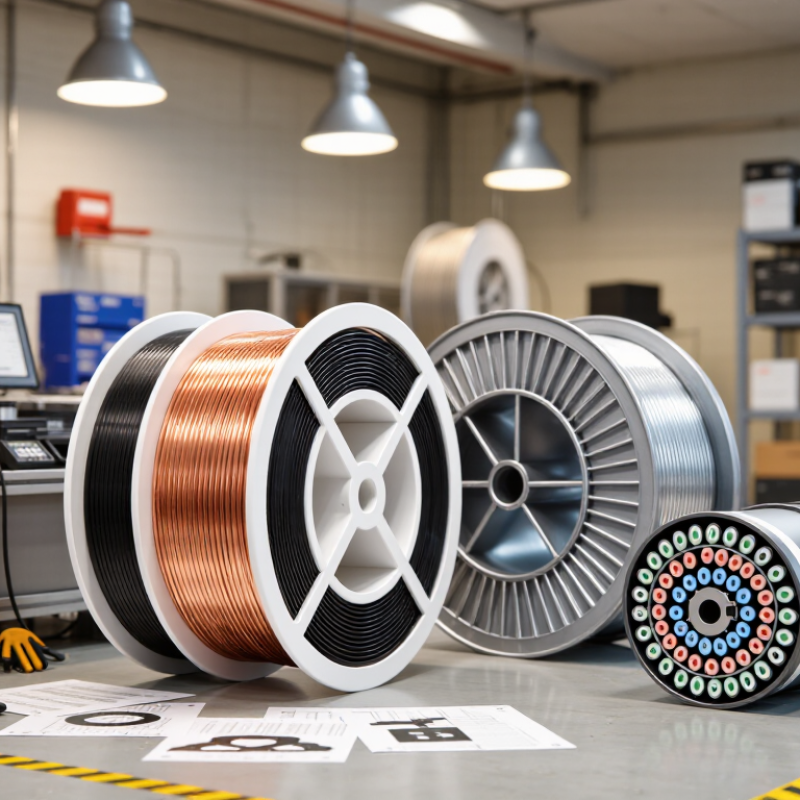
Concentric cable places a phase conductor at the center and neutral wires around it. Insulation and an outer sheath complete the structure. This design supports compact low-voltage distribution, service connections, and some underground installations. A tidy fit. The surrounding neutral can also simplify certain connection arrangements, but engineers must verify local requirements. Cable performance depends on conductor material, cross-sectional area, insulation type, voltage rating, and installation conditions.
Global grid investment makes dependable conductors increasingly important. The International Energy Agency forecast global electricity demand would grow by 4% in 2024 and 4.1% in 2025 in Electricity 2024. IRENA reported 473 GW of renewable capacity added during 2023, representing 86% of total new power capacity. These figures do not measure concentric cable demand directly. They do show why distribution networks face expanding connection workloads.
For global buyers, selection should begin with the application, not a catalogue ranking. Confirm compliance with relevant IEC requirements, conductor resistance, sheath durability, bending radius, and temperature limits. Ask for routine test reports and traceable material records. Field teams should also review soil conditions, water exposure, jointing methods, and expected load growth. A cable that works well in a dry trench may disappoint in a flooded one. This is where specifications become less glamorous, and more important. Cost comparisons can mislead when installation time and replacement access are ignored. Procurement teams should challenge optimistic service-life claims and request evidence from comparable projects.
Concentric cables combine an insulated central conductor with a surrounding concentric conductor, which can serve as a neutral, protective conductor, or earthing path. The chart shows commonly specified nominal conductor cross-sectional areas used in low-voltage power-cable designs. Actual current capacity depends on conductor material, insulation, installation method, ambient temperature, and local standards.
Choosing among the 10 best concentric cable manufacturers requires more than comparing price lists. Start with verified production evidence. The IEA’s Electricity Grids and Secure Energy Transitions report estimates global grid investment must rise from about $300 billion annually to over $600 billion by 2030. That pressure makes capacity, delivery discipline, and material traceability important buying criteria.
Request conductor resistance results, insulation thickness records, and routine test reports for each proposed cable size. IEC 60228 supports conductor classification, while IEC 60502-1 covers many low-voltage power cable requirements. Check whether the manufacturer performs type testing, thermal aging tests, and voltage tests through accredited laboratories. Ask for batch numbers printed on the sheath. A clear factory trail matters.
Visit the plant if the project is large. Watch copper or aluminum handling, stranding control, extrusion cleanliness, and drum protection. The ISO Survey reports millions of certified management-system sites worldwide, but certification alone proves little about daily cable quality. Review nonconformance records and corrective actions. Honest answers are useful.
Compare quoted delivery times with actual shipment history, not optimistic promises. Confirm export packaging, moisture protection, minimum order quantities, and replacement procedures. Use independent inspection before shipment when network failure would be costly. A spreadsheet can still lie. I would also score communication speed, technical drawings, and sample consistency. This last point is imperfect, yet repeated sample checks often reveal process variation earlier than a polished audit.
The first manufacturer specializes in medium-voltage concentric cables for urban distribution networks. Its plants use copper screening, moisture-resistant insulation, and routine partial-discharge testing.
The second focuses on aluminum conductors, helping utility buyers reduce cable weight and installation strain. Its production records show strong batch traceability.
The third serves renewable-energy projects, producing cables with sunlight-resistant jackets and flexible concentric layers. Field teams report reliable performance near substations. Some documentation remains less detailed than expected.
The fourth manufacturer supplies low-voltage cables for residential and commercial connections. It offers several conductor sizes, clear marking, and factory length checks.
The fifth combines automated stranding with manual visual inspection. That balance can reduce surface defects, although human inspection still depends on training.
The sixth develops fire-resistant cable designs for dense buildings. It tests smoke behavior, insulation integrity, and bending performance. Practical testing matters.
The seventh manufacturer supports harsh coastal environments with corrosion-resistant materials and sealed packaging.
The eighth produces custom concentric cables for rail, industrial, and infrastructure applications. Its engineering team reviews voltage, fault current, soil conditions, and installation temperature before quoting.
The ninth maintains short lead times through regional warehouses, which benefits urgent projects but may limit customization.
The tenth emphasizes export compliance, technical certificates, and stable quality systems. Buyers should compare conductor resistance, screen construction, sheath durability, test reports, and after-sales response rather than relying on catalog claims alone. Some suppliers appear similar until installation conditions expose the differences.
10 Best Concentric Cable Manufacturers for Global Buyers
Product quality should begin with conductor consistency, not catalog photos. IEC 60228 defines conductor classes, resistance limits, and verification methods. IEC 60502-1 covers many low-voltage power cable designs. Buyers should request test reports matching the actual conductor size and insulation compound.
Capacity needs physical evidence. Ask for monthly output, extrusion-line counts, copper sourcing, and recent delivery records. The International Copper Study Group forecast refined copper usage would grow 2.2% in 2024. That pressure can affect lead times and pricing. IEA’s Electricity 2024 report also projected global electricity demand growth of about 4% in 2024 and 2025. Demand is rising, but factory capacity claims still require checking. A factory may list ten lines, while only six are operational. That detail matters.
Tips: Compare prices using the same conductor area, insulation thickness, sheath material, drum length, and shipping terms. Request a sample, dimensional report, flame test, and resistance result before approving bulk production. Check whether certificates cover the exact cable structure. The lowest quote can be correct. It can also be a warning. Pricing should include copper adjustment rules, testing fees, packaging, and replacement terms. A practical audit should inspect one finished drum, trace its batch number, and compare measured weight with the declared weight. Mistakes happen, even in experienced plants; transparent correction is often more valuable than polished promises.
| Anonymous Supplier Profile | Typical Product Scope | Conductor and Neutral Configuration | Common Voltage Rating | Applicable Standards | Typical Size Range | Quality and Testing Indicators | Estimated Annual Capacity Category | Typical Export Lead Time | Indicative FOB Price Range |
|---|---|---|---|---|---|---|---|---|---|
| Supplier Profile 01 | Low-voltage concentric service and distribution cables for utility connections | Class 2 stranded copper conductor with copper concentric neutral wires | 0.6/1 kV | IEC 60502-1 IEC 60228 IEC 60332-1-2 | 10–300 mm² phase conductor; 6–120 mm² concentric neutral | Routine tests, conductor resistance, high-voltage test, dimensional inspection, flame-retardance verification | Large: 15,000–30,000 tonnes/year | 4–7 weeks | US$2.80–8.90/m |
| Supplier Profile 02 | Aluminium concentric cables for residential and rural power networks | Class 2 compacted aluminium conductor with aluminium concentric neutral | 0.6/1 kV | IEC 60502-1 IEC 60228 ASTM B230 | 16–400 mm² phase conductor; 10–150 mm² concentric neutral | Aluminium conductivity testing, insulation eccentricity checks, spark testing, tensile and elongation tests | Large: 20,000–40,000 tonnes/year | 5–8 weeks | US$1.45–5.60/m |
| Supplier Profile 03 | Halogen-free and low-smoke concentric cables for buildings and public infrastructure | Flexible stranded copper conductor with copper or tinned-copper concentric screen | 0.6/1 kV | IEC 60502-1 IEC 60754-1 IEC 61034-2 | 6–240 mm² phase conductor; 6–95 mm² neutral | Low-smoke emission, halogen-acid gas, vertical flame, insulation resistance, and voltage withstand testing | Medium: 5,000–12,000 tonnes/year | 6–9 weeks | US$4.20–12.50/m |
| Supplier Profile 04 | Utility-grade concentric cables for underground service entrances and meter connections | Solid or stranded copper phase conductor with split concentric neutral arrangement | 0.6/1 kV | IEC 60502-1 BS 7870 IEC 60228 | 16–185 mm² phase conductor; 10–70 mm² neutral | Concentric wire spacing control, sheath thickness measurement, cold-bend test, and utility drawing compliance | Medium: 8,000–18,000 tonnes/year | 5–8 weeks | US$3.10–9.70/m |
| Supplier Profile 05 | Armoured concentric cables for industrial and infrastructure installations | Copper or aluminium conductor, concentric neutral, steel wire armour, and PVC or LSZH sheath | 0.6/1 kV | IEC 60502-1 IEC 60332-1-2 IEC 60228 | 25–630 mm² phase conductor; 16–240 mm² neutral | Armour coverage, impact resistance, sheath mechanical testing, voltage withstand, and conductor resistance tests | Large: 12,000–25,000 tonnes/year | 7–11 weeks | US$5.80–18.00/m |
| Supplier Profile 06 | Compact concentric cables designed for restricted ducts and high-density urban networks | Compact stranded aluminium conductor with reduced-diameter concentric neutral | 0.6/1 kV | IEC 60502-1 IEC 60228 EN 50363 | 16–300 mm² phase conductor; 10–120 mm² neutral | Overall diameter tolerance, bending performance, insulation thickness, water penetration resistance, and routine electrical tests | Medium: 6,000–15,000 tonnes/year | 6–10 weeks | US$1.90–7.40/m |
| Supplier Profile 07 | Fire-performance concentric cables for transport, hospitals, and commercial facilities | Copper conductor with copper concentric neutral and enhanced fire-resistant insulation system | 0.6/1 kV | IEC 60502-1 IEC 60331 IEC 60332-3 | 10–240 mm² phase conductor; 6–95 mm² neutral | Fire-resistance duration testing, circuit-integrity testing, smoke-density testing, and flame-spread classification | Small to medium: 3,000–8,000 tonnes/year | 8–12 weeks | US$6.50–22.00/m |
| Supplier Profile 08 | Weather-resistant concentric cables for outdoor service drops and exposed installations | Stranded aluminium or copper conductor with UV-resistant XLPE or PVC insulation | 0.6/1 kV | IEC 60502-1 IEC 60811 IEC 60228 | 16–185 mm² phase conductor; 10–70 mm² neutral | UV ageing, thermal ageing, insulation tensile strength, abrasion resistance, and water-resistance testing | Medium: 7,000–16,000 tonnes/year | 5–9 weeks | US$2.10–8.20/m |
| Supplier Profile 09 | Custom-engineered concentric cables for renewable-energy and remote-grid projects | Flexible copper or aluminium conductor with customized neutral, screen, and sheath construction | 0.6/1 kV; selected designs up to 1.8/3 kV | IEC 60502-1 IEC 60228 IEC 62930 | 10–500 mm² phase conductor; project-specific neutral sizes | Design verification, thermal-cycle testing, UV resistance, water penetration, bending, and project-specific type tests | Small to medium: 2,000–10,000 tonnes/year | 8–14 weeks | US$4.80–16.50/m |
| Supplier Profile 10 | Export-oriented standard concentric cables for distributors and electrical contractors | Class 2 copper or aluminium conductor with copper or aluminium concentric neutral | 0.6/1 kV | IEC 60502-1 IEC 60228 ASTM B8 | 10–400 mm² phase conductor; 6–150 mm² neutral | Batch traceability, conductor resistance, insulation thickness, spark testing, voltage withstand, and packing inspection | Large: 15,000–35,000 tonnes/year | 4–8 weeks | US$1.70–9.50/m |
Data note: The supplier profiles are intentionally anonymized. Capacity, lead-time, and FOB price figures are industry benchmark ranges for standard 0.6/1 kV concentric cable constructions and vary with conductor metal prices, cable size, insulation material, order quantity, certification requirements, destination, packaging, and Incoterms. Buyers should verify current factory capacity, test certificates, type-test reports, and quotations before purchase.
Selecting the right concentric cable supplier requires more than comparing price lists. Global electricity demand is forecast to grow by about 4% in 2024 and 2025, according to the International Energy Agency’s Electricity 2024 report. This pressure can expose weak production planning. Check whether the manufacturer controls conductor drawing, insulation, shielding, and final testing. Ask for IEC 60228 conductor data, IEC 60502-1 compliance where applicable, and recent routine-test records. Copper purity, conductor resistance, insulation thickness, and sheath durability should match your project specification.
Tips: Request a sample before signing. Measure its diameter and resistance. Inspect the concentric wire spacing. Ask for batch traceability, factory photographs, and an independent inspection option. A polished certificate is not enough.
S&P Global’s Future of Copper report expects copper demand to rise from roughly 28 million metric tons in 2025 to 42 million by 2040. Material availability may therefore affect lead times and quotations. Ask suppliers how they manage copper sourcing, price adjustments, and replacement materials. Review their monthly capacity, minimum order quantity, export packaging, and delivery history. A low quotation can hide thin insulation, unclear tolerances, or expensive delays. I would also compare two technical offers line by line, not only their totals. Some suppliers may provide excellent samples but inconsistent mass production. That is where a small pilot order becomes useful. Pay attention to coil markings, moisture protection, and documentation accuracy. Mistakes happen, even in experienced factories. The supplier’s response to a detected mistake matters greatly.
It has a central phase conductor and neutral wires arranged around it. Insulation and an outer sheath complete the cable. The structure is compact.
It suits low-voltage distribution, service connections, and some underground installations. Engineers must confirm local requirements before specifying it.
Conductor material, cross-sectional area, insulation type, voltage rating, and installation conditions all matter. Soil, water, heat, and bending can change results.
Begin with the application, not a catalogue ranking. Define expected load, installation route, environmental exposure, and future demand.
Request resistance results, insulation records, routine test reports, and traceable material information. Batch numbers on the sheath can support factory tracking.
A certificate alone may not show daily production quality. Review conductor handling, stranding control, extrusion cleanliness, drum protection, and corrective-action records.
Compare promised delivery with actual shipment history. Confirm minimum order quantities, export packaging, moisture protection, and replacement procedures.
Review soil conditions, water exposure, jointing methods, bending radius, and temperature limits. A dry trench does not represent a flooded one.
Not always. Installation time, inspection costs, replacement access, and failure risks may outweigh the initial saving.
Score samples, technical drawings, communication speed, and shipment records. This method is not flawless, but repeated checks can reveal variation early.
This guide explains what Concentric Cable is, how its layered conductor design supports reliable power distribution, and why it is widely used by global buyers in residential, commercial, industrial, and infrastructure projects. It also outlines the key factors for evaluating manufacturers worldwide, including conductor materials, insulation performance, production technology, testing procedures, certifications, delivery capability, and technical support.
The article presents profiles of ten leading types of manufacturers without focusing on brand names, helping readers compare product quality, compliance with international standards, manufacturing capacity, customization options, lead times, and pricing. It concludes with a practical framework for selecting the right supplier based on project requirements, operating conditions, order volume, budget, documentation, and long-term service. By using these criteria, buyers can reduce procurement risks and choose a dependable Concentric Cable partner for safe, efficient, and consistent project performance.

Laurence