Choosing a dependable Cable Wire manufacturer can shape project safety, delivery speed, and long-term operating costs. Global buyers need more than attractive quotations. They need verified production capacity, consistent materials, and responsive technical support.
This guide reviews ten leading Cable Wire manufacturers serving international markets. The comparison considers copper and aluminum quality, insulation performance, product range, testing procedures, certifications, and export experience. It also examines practical details, such as reel protection, labeling accuracy, lead times, and communication during specification changes. These details matter. A damaged reel can delay installation before the cable reaches the jobsite.
Reliable manufacturers usually provide traceable raw materials, documented quality controls, and test reports for each production batch. Buyers should examine factory audits, sample performance, warranty terms, and after-sales support. Standards such as IEC and ISO can offer useful reference points, but certificates alone do not prove every product fits a specific project. Proof matters.
The ranking is designed to support careful supplier research, not replace professional verification. Some manufacturers excel in high-voltage systems, while others serve construction, automotive, renewable energy, or industrial applications. No supplier is perfect. Product availability, regional logistics, and communication quality may change over time. Buyers should confirm current capabilities directly and request project-specific documentation before making a commitment. This guide may simplify a complex market, but it offers a practical starting point for informed global purchasing decisions.
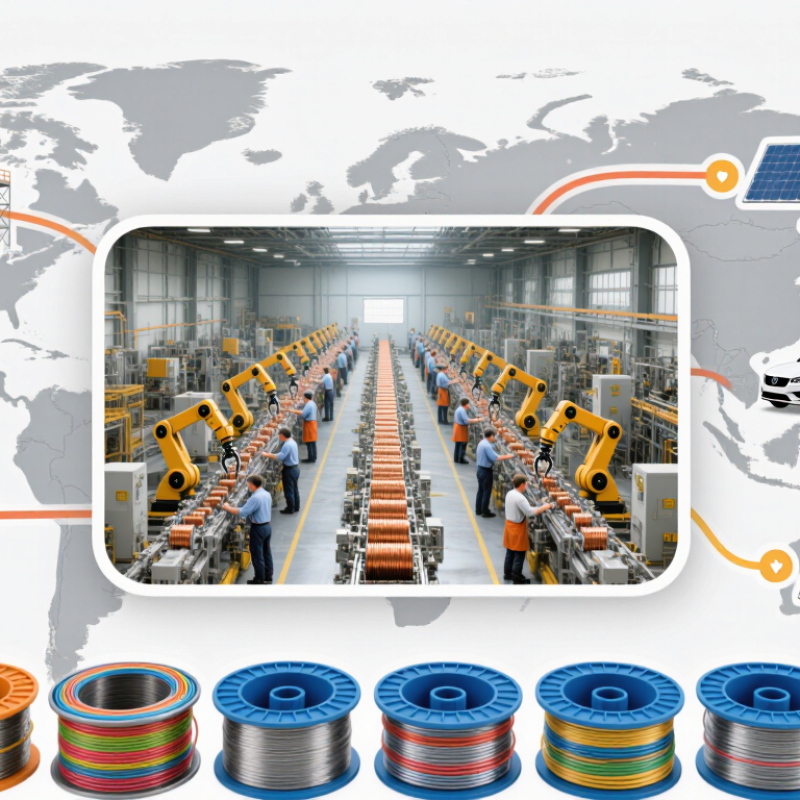
Global buyers should judge cable wire manufacturers by evidence, not polished catalogs. The first check is relevant experience: voltage class, conductor material, insulation type, and project environment. Ask for dated test records, batch traceability, and corrective-action reports. These details show whether quality survives production pressure. Not just a sample. IEC 60502-1 and IEC 60228 provide useful benchmarks for cable construction and conductors. However, a claimed standard is not proof. The IEA’s Electricity 2024 report expects global electricity demand to grow by 3.2% annually through 2026. That growth increases the cost of late deliveries and weak documentation.
For a Top 10 shortlist, auditors should inspect process control, laboratory capability, and supplier continuity. ISO 9001 certification helps, but independent verification matters more. Review conductor resistance, tensile strength, aging, flame, and insulation tests against the purchase specification. Request raw-material origin, production capacity, lead times, and shipping records. Capacity claims can be optimistic. Walk through a factory remotely or in person, then compare its equipment with stated output. IRENA’s Renewable Capacity Statistics 2025 recorded 585 gigawatts of renewable capacity additions in 2024, increasing demand for dependable grid cabling.
Commercial evaluation must include total landed cost, warranty response, currency exposure, and delivery resilience. Cheap cable can become expensive after a failed inspection or port delay. Compare quoted copper formulas with transparent adjustment clauses. Also examine environmental data, recycled-content claims, and energy reporting. Those claims need measurable documents. I would score technical evidence above marketing language, while admitting one limitation: factory visits cannot predict every failure. Independent sampling and incoming inspection remain necessary.
One project may need building wire, control cable, data cable, and power cable. A broad range reduces sourcing pressure. It also simplifies technical coordination.
Check export support, regional warehouses, and shipping systems. Ask how the supplier handles deliveries beyond its home region. Strong reach does not always mean strong service.
Request datasheets, batch test reports, conductor details, and insulation specifications. Compliance documents should match the destination market. Check certificate scopes and expiration dates.
Requirements may include IEC, EN, ASTM, or national standards. ISO 9001 supports controlled production processes. ISO 14001 shows structured environmental management.
A capable facility may include wire drawing, annealing, and stranding. It should also have insulation extrusion, printing, and final winding. Clean production areas matter.
Audits can reveal details that documents hide. Look for calibrated testing equipment and controlled material storage. Visible lot identification is valuable.
Yes, sample approval remains useful for routine cables. Inspect surface finish, labeling, flexibility, and bend behavior. Real samples may expose unexpected weaknesses.
No supplier is flawless. A large catalog may hide limited experience with unusual voltages or harsh climates. Review test results, traceability, capacity, and after-sales response. That uncomfortable check can prevent costly delays.
Strong packaging protects cable drums during transport. Damaged reels can delay installation at a busy construction site. They may also create avoidable material waste.
This guide presents a practical framework for evaluating Cable Wire manufacturers from a global buyer’s perspective. It explains how suppliers can be compared by product range, international market reach, production capacity, technical expertise, and ability to support different project requirements. The overview also introduces key cable types, conductor and insulation materials, and the major industries they serve, including construction, energy, telecommunications, transportation, and industrial automation.
In addition, the article highlights the importance of quality management, recognized certifications, testing procedures, customization services, delivery reliability, and after-sales support. Global buyers can use these factors to assess supplier credibility, product consistency, compliance readiness, and total purchasing value. Rather than focusing only on price, the guide encourages buyers to consider long-term cooperation, communication efficiency, production flexibility, and risk control when selecting the most suitable manufacturing partner for their regional and project-specific needs.

 Laurence