Choosing reliable China aluminum cable manufacturers requires more than comparing prices and product photos. This guide examines suppliers through practical purchasing details, including conductor quality, insulation performance, production capacity, testing procedures, and export experience. A dependable manufacturer should explain its aluminum grades, cable structures, voltage ratings, and applicable standards clearly. It should also provide traceable test reports, factory information, and consistent communication. These details matter when cables are installed in factories, solar projects, commercial buildings, or utility networks.
Real sourcing experience shows that small differences can create major problems. A cable may look polished while using unsuitable insulation for heat, moisture, or outdoor exposure. Buyers should request samples and inspect conductor flexibility, surface finish, diameter tolerance, and packaging condition. Factory audits can reveal whether equipment is modern, maintenance is regular, and quality checks occur during production. Questions about minimum order quantities, lead times, warranty terms, and after-sales support deserve direct answers.
No supplier is perfect. Even a respected factory may experience delays or material shortages. A shortlist can still mislead. Buyers should compare evidence instead of relying on impressive claims. This overview introduces leading China Aluminum Cable manufacturers and suppliers, while recognizing that rankings depend on project requirements, certification needs, budget, and delivery location. The strongest choice is not always the cheapest one. It is the supplier that communicates honestly, controls quality consistently, and supports the cable throughout its expected service life.
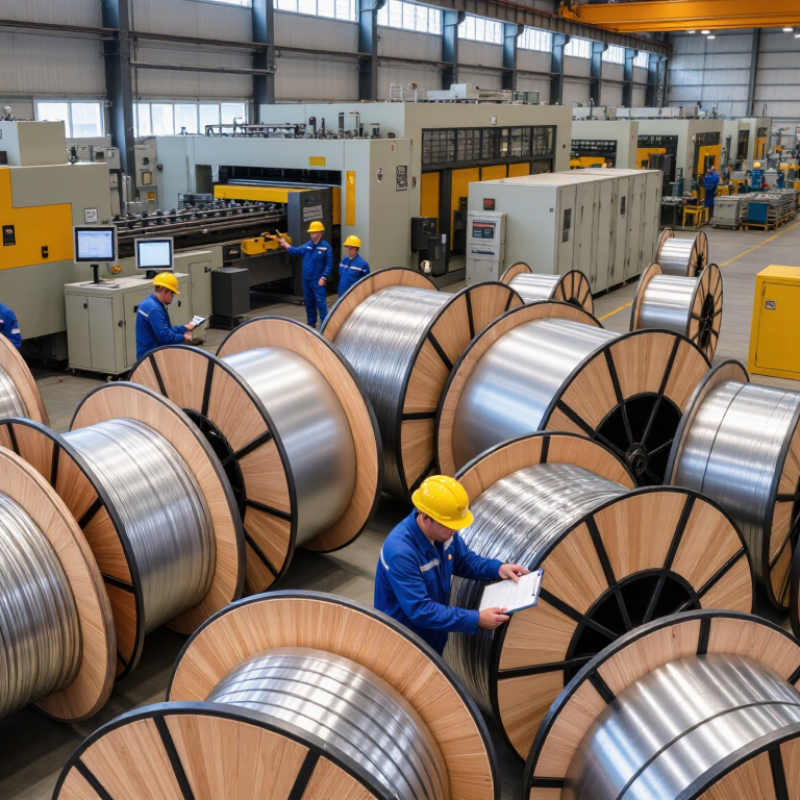
China’s aluminum cable manufacturing covers several designs for overhead, building, and power distribution projects.
All-aluminum conductor is lightweight and suitable for shorter spans where high conductivity matters. Aluminum alloy conductor offers better strength and improved resistance to mechanical stress. It can perform well across open terrain.
Steel-reinforced aluminum conductor combines aluminum strands with a galvanized steel core. The core supports long spans, while the outer strands carry current. Aluminum conductor alloy-reinforced designs provide strength without relying on a steel center.
For insulated systems, manufacturers produce aluminum cables with PVC, XLPE, or other protective layers. These options suit underground routes, buildings, and industrial equipment. Some cables include concentric neutral layers or shielding for safer power distribution.
Factory selection should match voltage, installation method, temperature, and pulling conditions. A cable may look correct but fail if its ampacity is poorly calculated. Manufacturing experience matters here.
Inspectors usually check conductor diameter, resistance, insulation thickness, tensile strength, and voltage performance. Batch records and test reports should remain traceable.
I have found that small details, such as compact stranding or jacket flexibility, affect installation time more than expected. This is easy to overlook.
Chinese manufacturers may also produce custom lengths, cross-sections, and sheath colors, but every change needs documented approval. Local standards must be confirmed before production, because a technically sound cable can still require redesign for a specific project.
Aluminum cable is increasingly used in overhead transmission, renewable-energy collection, industrial feeders, and large commercial buildings. Its density is about one-third of copper, while its electrical conductivity is roughly 61% of copper. This lower weight can reduce tower loading and simplify long-span installation. The International Energy Agency’s Electricity Grids and Secure Energy Transitions report estimates that annual grid investment must exceed USD 600 billion by 2030. That expansion increases demand for lightweight conductors, but performance cannot depend on weight alone.
Key requirements include ampacity, voltage-drop control, thermal stability, corrosion resistance, and reliable connections. Aluminum expands more than copper, so terminals must manage thermal cycling and contact pressure. Overhead cables also need controlled sag under high temperatures and wind loads. For underground systems, insulation must resist moisture, soil chemicals, and continuous heating. IEC test methods and project-specific utility specifications should guide acceptance. A cable may pass a laboratory test yet perform poorly when installation torque is inconsistent. That risk deserves attention.
Tips: Check conductor size using real load profiles, not nominal current only. Review joint compounds, terminal compatibility, bending radius, and emergency temperature limits. Ask suppliers for verified resistance, tensile, aging, and short-circuit data. The IEA’s 2024 Electricity report also highlights rising electricity demand, making efficiency and reliability more important. A common mistake is selecting aluminum only for its lower purchase cost. Long-term losses, maintenance access, and installation quality can change the real value.
| Aluminum Cable Type | Typical Application | Conductor Material and Construction | Typical Voltage or System Use | Key Performance Requirements | Common Technical Standards | Important Inspection and Supply Criteria |
|---|---|---|---|---|---|---|
| AAC (All-Aluminum Conductor) |
Urban overhead distribution, short-span feeders, and installations where high conductivity is more important than mechanical strength. | Stranded aluminum conductors, commonly made from electrical-conductor-grade aluminum such as 1350 alloy. | Low- and medium-voltage overhead distribution systems, depending on the design. | High electrical conductivity, consistent strand diameter, low resistance, adequate flexibility, and reliable joint compatibility. | ASTM B230, ASTM B231, IEC 61089, or an equivalent national standard. | Verify conductor cross-sectional area, DC resistance at 20°C, tensile performance, strand lay, surface condition, and dimensional uniformity. |
| AAAC (All-Aluminum Alloy Conductor) |
Overhead distribution and transmission lines requiring improved mechanical strength and corrosion resistance compared with conventional AAC. | Stranded aluminum-magnesium-silicon alloy wires, without a steel core. | Distribution and transmission networks, particularly in coastal, industrial, or polluted environments. | Higher tensile strength than AAC, good corrosion resistance, stable sag performance, and suitable conductivity for the line design. | IEC 61089, ASTM B399, or an equivalent national standard. | Check alloy designation, conductivity, breaking load, elongation, lay ratio, surface defects, and compatibility with compression fittings. |
| ACSR (Aluminum Conductor Steel-Reinforced) |
Long-span overhead transmission, river crossings, railway crossings, and lines exposed to high mechanical loading. | Aluminum strands surrounding a galvanized steel core that provides mechanical reinforcement. | Medium- and high-voltage overhead transmission and distribution systems. | High tensile strength, controlled sag, resistance to vibration, suitable aluminum conductivity, and secure steel-core protection. | ASTM B232, IEC 61089, EN 50182, or an equivalent national standard. | Inspect aluminum and steel wire sizes, core concentricity, zinc coating, breaking load, DC resistance, strand lay, and reel protection. |
| LV Aluminum Power Cable | Industrial plants, commercial buildings, utility feeders, infrastructure projects, and underground low-voltage networks. | Stranded compacted aluminum conductor with thermoplastic or thermosetting insulation and an optional sheath, armor, or screen. | Commonly 0.6/1 kV systems, subject to the applicable cable standard and project specification. | Low conductor resistance, suitable current-carrying capacity, insulation integrity, bending flexibility, flame performance where required, and moisture protection for underground use. | IEC 60502-1, IEC 60228, HD 603, or applicable national standards. | Confirm conductor class, insulation thickness, sheath thickness, voltage test, conductor resistance, dimensional checks, and routine production testing. |
| XLPE-Insulated Aluminum Cable | Power distribution, substations, renewable-energy collection systems, industrial feeders, and underground networks. | Aluminum conductor with cross-linked polyethylene insulation; metallic screen, water-blocking layer, armor, and sheath may be added according to installation conditions. | Low- and medium-voltage systems; medium-voltage designs commonly cover voltage classes from 3.6/6 kV up to 18/30 kV. | Continuous conductor operating temperature commonly up to 90°C for XLPE designs, short-circuit temperature commonly up to 250°C for a limited duration, electrical-tree resistance, and moisture protection where required. | IEC 60502-1 for low voltage, IEC 60502-2 for medium voltage, and IEC 60228 for conductor requirements. | Require insulation-screen concentricity, partial-discharge testing for medium-voltage cable, withstand testing, conductor resistance, sheath integrity, and temperature-rating documentation. |
| Armored Aluminum Cable | Direct burial, industrial sites, cable trays, tunnels, utility projects, and locations requiring improved mechanical protection. | Aluminum conductor with insulation and a metallic armor layer, such as aluminum wire armor or steel wire armor, covered by an outer sheath. | Low- or medium-voltage systems, according to the cable design and installation method. | Resistance to crushing, impact, moisture, soil chemicals, ultraviolet exposure, and mechanical pulling forces; armor must also provide the required electrical protection or grounding path where specified. | IEC 60502 series, IEC 60228, IEC 60332 where flame testing is required, and relevant installation codes. | Check armor coverage, armor continuity, sheath spark test, tensile and compression performance, minimum bending radius, and drum-length accuracy. |
| Aerial Bundled Cable (ABC) |
Overhead low-voltage service connections, urban distribution, rural electrification, and locations where reduced right-of-way or improved contact safety is needed. | Several insulated aluminum conductors twisted around a messenger or neutral conductor, depending on the configuration. | Typically low-voltage overhead distribution and service networks. | Weather resistance, UV stability, resistance to abrasion, reliable neutral or messenger strength, low installation sag, and stable insulation performance under outdoor conditions. | IEC 60502-1, HD 626, IEC 60228, or an applicable national standard. | Verify insulation weathering performance, conductor identification, messenger breaking load, torsion, spark test, dimensional control, and accessories compatibility. |
| Solar and Renewable-Energy Aluminum Cable | Solar farm collector circuits, inverter connections, battery-storage interconnections, and renewable-energy substation feeders. | Aluminum conductor with insulation and sheath selected for outdoor, buried, tray, or conduit installation; compacted conductors may reduce overall cable diameter. | Low-voltage DC or AC collection circuits and medium-voltage AC collector systems, according to the project design. | UV and ozone resistance, thermal cycling capability, moisture resistance, low contact resistance, compatibility with approved terminals, and reliable performance under daily load variation. | IEC 60502 series, IEC 60228, IEC 62930 for applicable photovoltaic cable designs, and project-specific electrical codes. | Confirm outdoor aging, insulation resistance, voltage withstand, thermal rating, connector compatibility, water penetration resistance, and installation bend-radius requirements. |
| Fire-Resistant or Low-Smoke Cable with Aluminum Conductor | Public infrastructure, transport facilities, high-rise buildings, data-related facilities, and other projects with enhanced fire-safety requirements. | Aluminum conductor with fire-resistant insulation or low-smoke, halogen-free materials where specified by the project. | Usually low-voltage systems; voltage rating depends on the complete cable construction. | Flame retardance, low smoke emission, reduced corrosive gas release, circuit integrity for the specified duration, and adequate heat resistance. | IEC 60332, IEC 60754, IEC 61034, IEC 60502, or applicable regional fire-performance standards. | Request independent fire-test reports, smoke-density results, gas-acidity results, circuit-integrity duration, insulation resistance, and full material traceability. |
| Flexible Aluminum Cable | Temporary power systems, movable equipment, specialized industrial installations, and applications requiring repeated routing changes. | Fine-stranded or specially designed aluminum conductor with flexible insulation and sheath materials. | Generally low-voltage applications, subject to the cable type and installation method. | Flexural endurance, low conductor resistance, resistance to abrasion and oil where required, stable termination performance, and compliance with the specified minimum bending radius. | IEC 60228, IEC 60502-1, and applicable flexible-cable standards. | Evaluate flexing-cycle performance, strand breakage, terminal pull-out force, insulation durability, conductor resistance, and production consistency. |
Note: Current-carrying capacity, allowable voltage drop, short-circuit rating, and cable dimensions must be calculated for the actual conductor size, installation method, ambient temperature, grouping conditions, soil thermal resistivity, and applicable local electrical code. Temperature values shown are typical design limits and must be confirmed against the selected standard and cable construction.
Choosing China’s top aluminum cable manufacturers requires more than comparing prices. The IEA’s Electricity Grids and Secure Energy Transitions report estimates that over 80 million kilometers of grids must be added or replaced by 2040. This expanding demand increases the need for stable conductor quality and dependable production capacity.
Ask each manufacturer for current ISO 9001 records, factory audit access, and test reports linked to specific batches. Check compliance with IEC 60228 for conductor resistance and construction. Request aluminum alloy details, tensile strength, elongation, insulation thickness, and resistance measurements at defined temperatures. A reliable supplier should explain its continuous casting, wire drawing, stranding, and final inspection processes clearly. Visit the production floor if possible. Look for calibrated instruments, clean storage, and traceable material labels.
Paper is not proof. Sample testing matters.
The International Aluminium Institute reports that aluminum remains central to electrical infrastructure because of its low weight and conductivity-to-mass advantage. However, lower weight does not automatically mean lower lifecycle risk. Compare jointing instructions, corrosion protection, drum packaging, and after-sales engineering support. Ask for independent laboratory verification before placing a large order. My practical concern is simple: some suppliers present excellent samples but inconsistent mass production. A small pilot shipment can expose that weakness. I would also review delivery records, complaint handling, and corrective-action reports. No evaluation is perfect, and even a careful audit may miss problems. That is why repeated batch testing should remain part of the purchasing plan.
This reference curve shows the approximate electrical conductivity retention of aluminum conductors as operating temperature increases. It is based on aluminum conductivity of about 61% IACS at 20°C and a temperature coefficient of approximately 0.00403/°C. When evaluating suppliers, compare their temperature-rise tests, conductor resistance results, material certificates, and compliance with applicable IEC standards.
When evaluating China-based aluminum cable manufacturers and suppliers, quality begins with a clear standard. Reliable factories usually work against applicable IEC, GB/T, or equivalent specifications. ISO 9001 certification can indicate controlled processes, but it does not prove every cable is safe. Product certificates must match the exact cable type, voltage rating, conductor class, and insulation material.
Testing should start with incoming aluminum rod inspection. Technicians check chemical composition, diameter, surface condition, and electrical resistivity. During production, calibrated equipment measures conductor resistance, stranding accuracy, insulation thickness, and cable dimensions. Each batch should receive a unique production code. This small detail supports traceability.
It matters greatly.
Finished cables commonly undergo voltage withstand, insulation resistance, tensile, elongation, and dimensional tests. Fire-performance or aging tests may apply to specialized designs. Independent laboratory reports add credibility when their sample numbers match the shipped goods. Factory auditors should also review calibration records, rejected-batch procedures, and storage conditions. Moisture and careless bending can damage cable quality before installation.
A certificate alone is not enough. In practice, documents may be current while production has changed. I would request recent test reports, raw-material records, and sealed samples before placing a large order. Some suppliers welcome third-party inspection; others provide incomplete evidence. That difference deserves attention, although it is not automatic proof of poor quality. Experienced purchasing teams compare standard clauses line by line and keep acceptance criteria in the contract. This process is slower, but it reduces avoidable disputes.
China’s aluminum cable market includes large factories, specialized producers, and trading companies. Their products may cover building wire, overhead conductors, power cables, and aluminum alloy designs. Request a technical datasheet before comparing prices. Check conductor grade, cross-sectional area, insulation material, voltage rating, and applicable standards. A 1,000-meter order can differ greatly from a 10,000-meter contract. Small details matter.
Pricing usually depends on aluminum costs, cable structure, insulation thickness, packaging, order quantity, and delivery terms. Ask suppliers to separate material, production, testing, and freight charges. A low quotation can look attractive. It may exclude wooden drums, export packing, or inspection fees. Confirm whether the price is fixed or linked to metal-market changes. Also request a sample, conductor-resistance report, insulation test results, and production lead time. Numbers should match the quotation.
Supplier selection needs more than a polished website. Review factory licenses, production equipment, quality procedures, export experience, and independent test records. A video call can show extrusion lines, drum labels, and storage conditions, but it cannot replace an audit. Specify accepted standards, marking requirements, warranty terms, and defect-handling procedures in the contract. Check communication speed, too. Slow replies during sampling may create larger problems after payment. One practical mistake is trusting a certificate without checking its scope and validity. Another is ignoring moisture protection during sea transport. Ask direct questions, document every answer, and compare suppliers using the same technical checklist.
Request current ISO 9001 records, factory audit access, and batch-linked test reports. Ask for alloy details, tensile strength, elongation, insulation thickness, and resistance measurements. Paper is not proof.
Check applicable IEC, GB/T, or equivalent requirements for the exact cable design. Conductor resistance and construction should match IEC 60228 when applicable. The certificate must match voltage rating, conductor class, and insulation material.
Review continuous casting, wire drawing, stranding, extrusion, and final inspection procedures. Look for calibrated instruments, clean storage, and traceable material labels. A video call helps, but it cannot replace an audit.
Finished cables commonly need voltage withstand, insulation resistance, tensile, elongation, and dimensional tests. Special designs may require fire-performance or aging tests. Request sealed samples and reports with matching sample numbers.
Each batch should have a unique production code linked to raw materials and test results. This helps identify problems in a shipped drum. Small detail. Big value.
Compare conductor grade, cross-sectional area, insulation thickness, packaging, quantity, and delivery terms. Ask suppliers to separate material, production, testing, and freight charges. A low quotation may exclude wooden drums or inspection fees.
Yes, a sample and small pilot shipment can reveal mass-production weaknesses. Check conductor resistance, insulation results, drum condition, and cable dimensions. Excellent samples can still mislead.
Define accepted standards, marking requirements, warranty terms, and defect-handling procedures. Include acceptance criteria and repeated batch testing requirements. Also confirm moisture protection during sea transport. I may still miss something.
China has become a major source of Aluminum Cable products for power transmission, construction, renewable energy, transportation, and industrial systems. Manufacturers commonly produce bare aluminum conductors, insulated power cables, alloy conductors, overhead cables, and specialized low- or medium-voltage designs. Each type must meet specific performance requirements, including conductivity, mechanical strength, flexibility, temperature resistance, weather durability, and reliable insulation.
When evaluating Chinese suppliers, buyers should review production capacity, technical expertise, quality-control systems, and experience with similar projects. Important considerations include compliance with recognized international or regional standards, traceable raw materials, routine electrical and mechanical testing, and valid inspection documentation. Sourcing decisions should also compare cable specifications, customization capabilities, minimum order quantities, lead times, packaging, payment terms, and total landed cost rather than focusing only on the quoted price. A well-qualified supplier should communicate clearly, provide consistent samples and test reports, support pre-shipment inspection, and demonstrate the ability to deliver stable quality for long-term supply requirements.

Laurence