Electricity travels through infrastructure most buyers rarely see: copper strands, insulation layers, cable drums, and carefully tested connections. Yet choosing an Electric Wire supplier affects project safety, installation time, and long-term maintenance. For global buyers, the decision is not simply about price. It is about verified specifications, production consistency, delivery capacity, and clear technical documentation.
The International Energy Agency’s 2023 report, Electricity Grids and Secure Energy Transitions, estimates that more than 80 million kilometres of grids must be added or refurbished by 2040 to meet national climate targets. That scale puts pressure on wire and cable supply chains. A low quotation may look attractive; inconsistent conductor dimensions or delayed shipments can quickly change the calculation. Details matter.
As a historical voice, Thomas Edison is often quoted as saying, “We will make electricity so cheap that only the rich will burn candles.” The line is widely attributed to him, though buyers should verify quotations as carefully as product claims. That caution applies here, too. Industry reports provide useful context, but they cannot replace factory audits, test certificates, or sample inspection.
This Top 10 guide compares suppliers through practical buyer questions: What conductor materials and insulation options do they offer? Can they support project-specific requirements and export documentation? How consistently do they communicate when specifications change? No supplier is perfect. A shortlist is a starting point, not a substitute for due diligence.
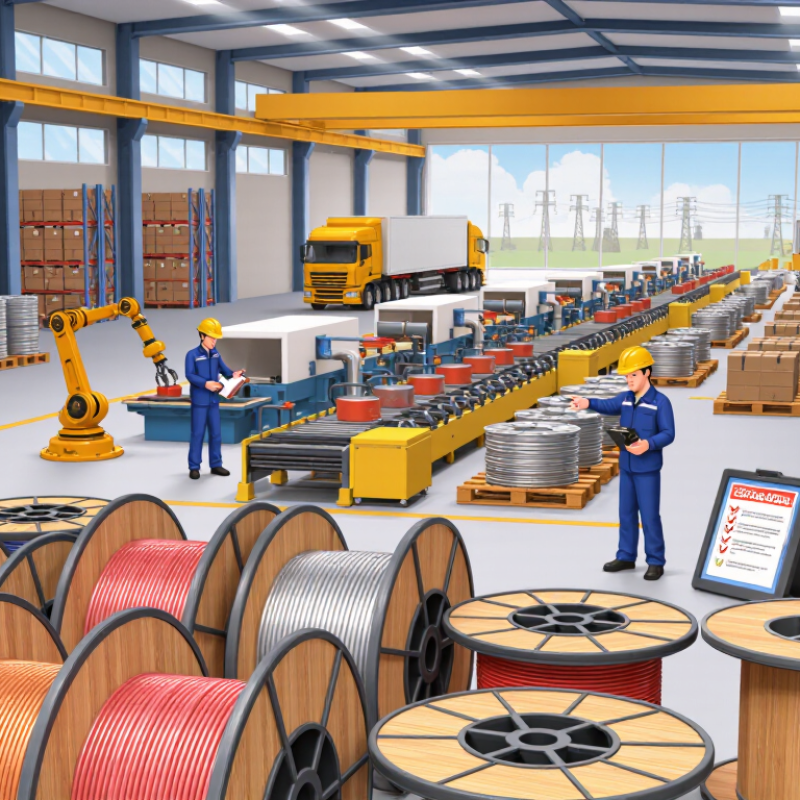
The global electric wire supplier landscape is broader than a simple price list. Buyers compare producers, exporters, distributors, and regional stockists. Each serves a different purchasing rhythm. A factory may offer customization, while a distributor can provide faster delivery. This difference matters during urgent maintenance or project expansion. Wire selection also depends on conductor material, insulation type, voltage rating, temperature range, and installation environment. A low quotation means little if the cable fails a required performance test.
Experienced buyers request technical datasheets, sample lengths, test reports, and traceable production records. They check conductor resistance, insulation thickness, tensile strength, and flame behavior against project specifications. Independent laboratory verification can strengthen confidence, especially for large orders.
Supplier audits should examine equipment calibration, batch labeling, storage conditions, and corrective-action records. Ask how the supplier handles rejected coils. A vague answer is a warning. Check the basics.
Global sourcing adds practical risks beyond manufacturing quality. Confirm export packaging, delivery terms, customs documentation, currency exposure, and after-sales communication. Time-zone gaps can slow decisions.
Clear drawings and written acceptance criteria prevent avoidable disputes. No supplier is perfect. Even a capable producer may miss a requested color or revise a delivery estimate.
That is why buyers should test communication before signing a large contract. A small trial order often reveals more than a polished presentation. Assumptions about local standards can be wrong, and experienced teams still overlook details.
Building-wire producers support housing and commercial projects. Aluminum-wire suppliers serve overhead distribution. Other specialists make flexible, automotive, control, solar, marine, data, or low-smoke cables.
A flexible-cable supplier is usually suitable. These cables tolerate repeated movement and bending. Check the bend radius, temperature range, and insulation thickness before ordering.
Confirm conductor diameter, insulation thickness, voltage rating, and temperature range. Request recent test reports and material declarations. A sample reel can reveal problems that photographs hide.
They help compare products against project requirements. Check whether documents cover the exact cable construction quoted. A general company certificate may not cover every product.
Test samples under realistic installation conditions. Measure conductivity, flexibility, insulation strength, and handling performance. A bright surface is not proof of good conductivity.
Export packaging should protect coils from moisture and crushing. Ask for packaging photographs and sample shipment records. A damaged reel can delay installation, even when the cable itself was acceptable.
Review export experience, customs documents, and realistic lead times. Ask about technical support after shipment. A wide service claim may hide uneven performance.
Not always. Compare quality records, factory audits, laboratory capacity, and delivery consistency. A cheaper cable may create expensive testing or replacement work later.
A small, clearly specified trial order is safer. Check batch tracing, documentation, packaging, and installation results. The review process may feel slow, but skipping it can be worse.
They may trust catalogues more than physical evidence. Specifications can change during a project. I would recheck every revision, because one unclear detail can cause costly confusion.
This article provides a practical overview of the global Electric Wire supplier landscape and explains how international buyers can identify dependable sourcing partners. It outlines the main criteria used to select ten representative suppliers, including product variety, manufacturing capacity, quality management, certification coverage, export experience, delivery performance, and technical support. The discussion is designed to help readers understand how supplier capabilities may differ across construction, industrial, energy, telecommunications, and custom wiring applications.
In addition, the article compares suppliers by product range, applicable standards, customization options, production flexibility, and international reach. It also presents a structured approach for evaluating potential partners based on voltage requirements, conductor materials, insulation types, compliance documentation, order volume, lead times, pricing transparency, and after-sales service. By considering both technical specifications and commercial reliability, global buyers can reduce sourcing risks, improve procurement efficiency, and select an Electric Wire supplier that matches their project requirements and long-term purchasing goals.

 Laurence