2026 How to Choose the Right Power Cable for Your Needs?

Time:2026-05-07 Author:Aria
0%

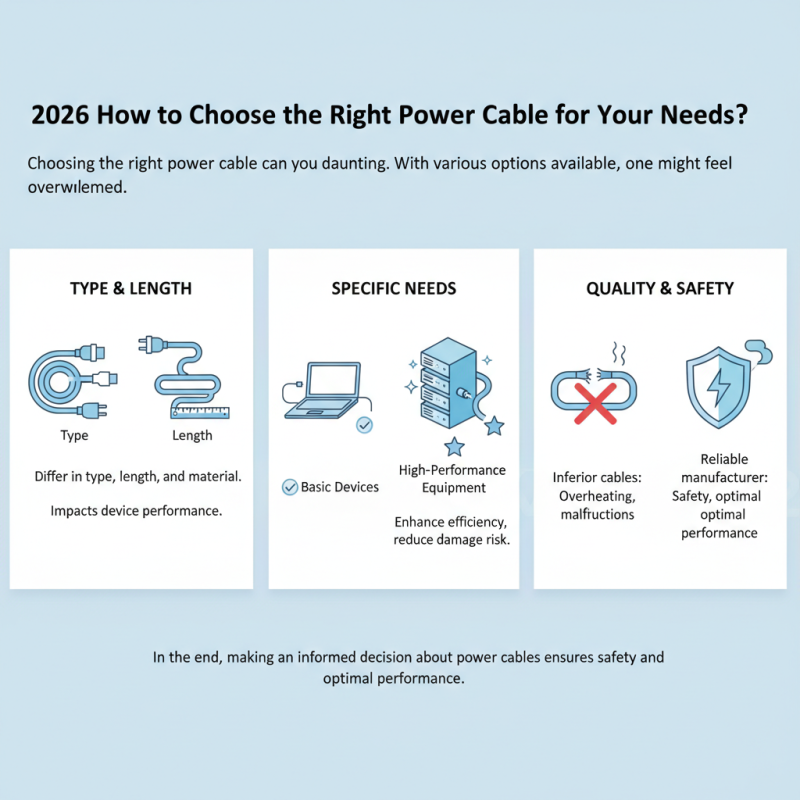
Choosing the right power cable can be daunting. With various options available, one might feel overwhelmed. Power cables differ in type, length, and material. Each choice impacts the performance of your devices.

Understanding your specific needs is essential. A cable that works for one device may not suit another. For example, high-performance equipment often requires specialized power cables. These cables can enhance efficiency and reduce the risk of damage.

Quality matters in power cables. Inferior cables may lead to overheating or malfunctions. Selecting a reliable option from a reputable manufacturer can save you troubles later. In the end, making an informed decision about power cables ensures safety and optimal performance.
2026 How to Choose the Right Power Cable for Your Needs?

Understanding Power Cable Types and Their Applications

When selecting the right power cable, understanding the types and their applications is essential. Power cables can be classified based on their insulation, voltage rating, and intended use. According to industry studies, low-voltage cables are typically used for residential applications, while medium-voltage cables serve industrial needs. High-voltage cables are crucial for transmission over long distances.

In a recent report by the International Energy Agency (IEA), the demand for robust power solutions is projected to grow by 25% by 2030. This reflects the increasing reliance on reliable energy sources. Moreover, cables designed for outdoor use must withstand environmental factors. For instance, UV protection is vital for cables exposed to sunlight. Some cables even feature enhanced thermoplastic compounds for flexibility and durability.

While there are various choices, selecting the right cable can be daunting. Your decision may impact safety and efficiency. Studies indicate that improper cable selection can lead to energy losses of up to 30% in some systems. Not all cables meet the latest safety standards, which makes it essential to consult regulatory guidelines. Understanding the specific needs of your application will help narrow down options and ensure better performance.

Power Cable Types and Their Applications

Key Factors to Consider When Selecting a Power Cable

Choosing the right power cable is crucial for safety and efficiency. Several key factors can guide this decision. The cable's voltage rating is fundamental. Ensure that the cable supports the voltage of your application. Using a cable with an inadequate rating can pose serious hazards.

Next, consider the current carrying capacity. This capacity, measured in amperes, determines how much load the cable can safely handle. According to the National Electrical Code (NEC), exceeding this limit leads to overheating. Additionally, the ambient temperature affects performance. As temperatures rise, the current capacity of cables typically decreases.

Cable insulation is another vital factor. Different materials, like PVC or rubber, provide varying levels of durability and resistance. A study by the Institute of Electrical and Electronics Engineers (IEEE) highlights that proper insulation reduces maintenance costs substantially. Lastly, consider environmental conditions such as moisture or chemicals. These could degrade the cable over time. While these factors guide selection, remember each application is unique. Tailoring choices to specific needs will yield the best outcomes.

Assessing Voltage and Current Requirements for Your Setup

Choosing the right power cable requires careful consideration of voltage and current needs. Voltage is crucial; exceeding your device's rating could cause failure. Low voltage cables may not deliver sufficient power, leading to performance issues. Assess the voltage specifications of your equipment to find a compatible cable.

Current capacity is equally important. Cables have specific limits on how much current they can safely carry. A cable rated for low current may overheat and fail if it’s used for high-demand setups. Check your devices for their current requirements. This ensures safety and efficiency.

Sometimes, users overlook the environment where cables will be used. Temperature and physical wear can affect performance. Also, the length of the cable plays a role. Longer cables can lead to voltage drops, impacting device operation. Reflect on your specific circumstances to avoid mistakes.

2026 How to Choose the Right Power Cable for Your Needs? - Assessing Voltage and Current Requirements for Your Setup

Cable Type Voltage Rating (V) Current Rating (A) Length (m) Usage Scenario
Type 1 Power Cable 250 10 2 Home Appliances
Type 2 Power Cable 400 16 3 Industrial Equipment
Extension Power Cable 230 13 5 General Use
Heavy Duty Power Cable 600 40 10 Construction Sites
Portable Power Cable 110 5 1.5 Mobile Devices

Material Choices: Copper vs. Aluminum in Power Cables

When selecting power cables, the material used is crucial. Copper and aluminum are two primary options, each with distinct advantages. Copper is known for its excellent conductivity. It allows for less voltage drop, making it ideal for short runs and high-demand applications. However, copper cables can be heavy and more costly.

Aluminum offers a lighter alternative. It's cheaper and easier to handle, but it has lower conductivity compared to copper. This means aluminum cables may require a larger gauge size to match the performance of copper. In some installations, this can be a significant disadvantage.

Choosing between these materials depends on your specific needs. Consider the installation environment. Will the cable face extreme temperatures or moisture? Also, think about budget constraints. Reflecting on the long-term costs is essential. While copper might seem expensive upfront, its durability may save you money over time. Weighing these factors carefully helps ensure your choice is effective.

Safety Standards and Regulations for Power Cable Selection

When selecting power cables, safety standards and regulations play a critical role. Various organizations, such as the National Electrical Code (NEC) and International Electrotechnical Commission (IEC), establish guidelines for cable selection. These guidelines ensure that cables meet necessary safety criteria. Non-compliance can lead to serious safety hazards, including electrical fires.

For instance, a report from the Electrical Safety Foundation International indicates that improper cable selection and installation are responsible for nearly 30% of electrical fires. This statistic highlights the importance of adhering to regulations. Selecting power cables requires careful consideration of the environment they will be used in. Factors such as temperature, humidity, and exposure to chemicals can affect performance and safety.

Furthermore, many professionals overlook the local amendments to national standards. These amendments can dictate specific requirements based on regional conditions. It's crucial to consult local codes or engage with a qualified electrician. Doing so allows you to ensure that the chosen cables align with all required safety standards. A failure to do so risks compromising safety and functionality.

FAQS

: Why is assessing voltage important for power cables?

: Assessing voltage is crucial. Exceeding a device's voltage rating can lead to failure.

What happens if I use low voltage cables?

Low voltage cables may not provide enough power. This can result in performance issues.

How do I check the current capacity of a cable?

Each cable has a specific current limit. Check your device's current needs to ensure compatibility.

What factors should I consider for cable length?

Longer cables can cause voltage drops. This can negatively impact how your device operates.

What are the advantages of copper cables?

Copper cables are highly conductive, reducing voltage drops. They perform well for high-demand applications.

Why might someone choose aluminum cables instead of copper?

Aluminum cables are lighter and less expensive. However, they have lower conductivity compared to copper.

What environmental factors affect cable performance?

Temperature and wear influence cable performance. Generally, harsh environments require more durable cables.

Should I be concerned about the installation environment?

Yes, installation conditions matter. Extreme temperatures or moisture can affect cable longevity and effectiveness.

Why is it important to reflect on long-term costs of cables?

High upfront costs can be misleading. Durable cables may save you money over time due to fewer replacements.

What should I think about regarding budget when choosing cables?

Balance cost with performance needs. Sometimes, spending more initially may lead to better long-term value.

Conclusion

When selecting the right power cable for your needs, it's essential to understand the various types of power cables available and their specific applications. Key factors to consider include the voltage and current requirements of your setup, as well as the material choices, such as copper or aluminum, which can impact conductivity and durability. Additionally, safety standards and regulations play a crucial role in ensuring that the selected power cable meets industry requirements, providing peace of mind and reliability in its performance.

By assessing these elements thoughtfully, you can make an informed decision that aligns with your power needs, ensuring the efficient and safe distribution of electricity in your project or installation. Understanding these critical factors will not only enhance the performance of your setup but also contribute to its overall safety and compliance with applicable standards.


Aria

Aria

Aria is a dedicated marketing professional with a deep passion for innovative strategies and a keen understanding of our company's product offerings. With a wealth of experience in the industry, Aria excels at crafting engaging content that highlights the unique features and benefits of our......