Choosing the right cable wire is crucial for safety and efficiency. According to the International Electrotechnical Commission (IEC), improper wire selection can lead to hazardous situations. For instance, a mismatch in cable specifications can result in overheating or electrical failures. Industry expert John Anderson, who has over 20 years of experience in electrical engineering, states, "Selecting the appropriate cable wire can significantly enhance a project's reliability and performance."
In the cable wire industry, understanding the various types available is essential. Factors such as voltage requirements, environmental conditions, and material composition play vital roles. Reports show that improper cable wire choices contribute to nearly 30% of electrical faults in professional settings. This staggering statistic emphasizes the need for careful evaluation before making a decision.
Yet, many professionals underestimate the importance of detailed assessments. Some rush into choices without fully considering all variables. Reflecting on these decisions often unveils gaps in knowledge that could jeopardize entire projects. The complexity of choosing the right cable wire requires a balance of expertise and vigilance to ensure lasting results.
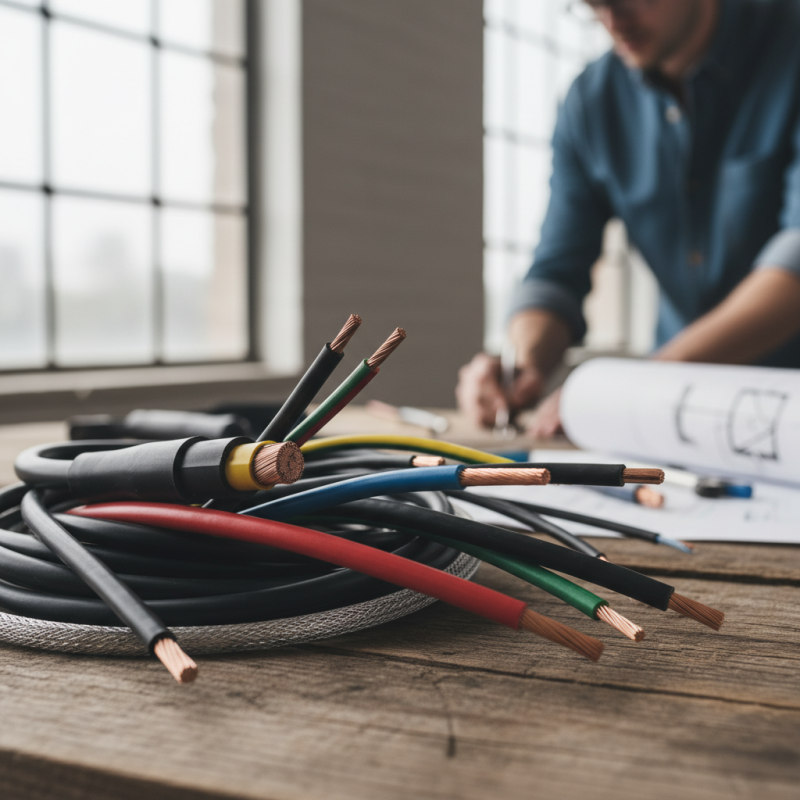
When selecting cable wires, understanding their types and applications is vital. There are various categories, each tailored for specific uses. For instance, copper cables excel in electrical conductivity, making them ideal for short-distance wiring. Aluminum wires are lighter and often cheaper but may not handle high loads well.
Another crucial type is fiber optic cables. These use light to transmit data and are perfect for high-speed internet. However, they can be fragile and require careful installation. Coaxial cable serves well for television and internet connections. Its robust build helps prevent signal interference, but it may not be suitable for long distances.
It's also important to consider insulation types. Different insulation materials can withstand varying temperatures and environments. PVC insulation is common but may not hold up in extreme conditions. More specialized options exist for industrial settings. It's easy to overlook these details, yet they significantly influence a cable's performance and longevity.
When choosing a cable wire, understanding your power and data transmission requirements is crucial. Different applications demand specific types of cables. For example, high-voltage environments require thick wires to handle increased current without overheating. You may need cables that can resist interference for data transmission. Consider where your wiring will go. Will it be outdoors or in a building? Environmental factors can affect performance.
Think about the distance the signal must travel. Longer distances can reduce signal strength. Selecting cables designed for longer runs can help maintain integrity. If you're transmitting data, bandwidth is essential. Higher frequencies may require specialized cables to support faster transmission speeds. Both power and data cables have unique specifications. Not understanding these can lead to poor performance.
It's beneficial to consult with professionals. They can guide you in selecting the right cable. Researching industry standards adds credibility to your choices. Take time to reflect on your project’s needs. Making the wrong decision can lead to costly adjustments. Balancing specifications with real-world applications is key.
When choosing the right cable wire, evaluating specifications is crucial.
Gauge, insulation, and rating directly impact performance.
The gauge indicates the wire's thickness. Thicker wires can handle more current.
According to the National Electrical Code (NEC), using the correct gauge reduces overheating.
For example, a 12-gauge wire is ideal for 20-amp circuits, while 14-gauge is suitable for 15 amps.
Insulation type is just as important. Different environments require specific insulation.
PVC is common for general use, but more demanding applications may require
Teflon or XLPE.
These materials withstand heat and electrical interference better.
A study by the Institute of Electrical and Electronics Engineers (IEEE) suggests that selecting appropriate insulation increases
lifespan and reliability.
Tips:
Always check the wire's rating before use. This ensures it suits your needs.
Double-check if the insulation matches your environment's demands.
When in doubt, consult an expert. Poor choices can lead to safety hazards and costly repairs.
Remember the importance of proper planning and research.
A small mistake can have serious consequences. Prioritize quality over cost to avoid future issues.
When selecting connectors for your cable needs, understanding the specifications is vital. Connectors come in various types, each designed for specific applications. For instance, you might need a connector that supports high-speed data transfer. This choice depends on the devices involved. Consider the environment as well. Some connectors are more durable and suitable for outdoor use.
Compatibility is another critical factor. Not all connectors fit with every type of cable. Mismatched components can lead to poor performance or even damage. Researching connector specifications can save you time and prevent issues later. Reflect on your experiences with cables. What has worked? What hasn’t? Evaluating these aspects can provide insight into making better decisions. Always prioritize quality to ensure reliability in your connections.
When choosing the right cable wire, installation and environmental factors are critical. Proper selection impacts performance and lifespan. For example, according to the International Electrotechnical Commission, over 30% of cable failures result from environmental factors. This highlights the importance of assessing conditions like temperature, humidity, and exposure to chemicals or sunlight when making a decision.
Consider the installation site. Indoor cables typically don’t require the same level of protection as outdoor cables. Outdoor cables should resist UV rays and moisture. Additionally, installation locations with high traffic may need abrasion-resistant cables. The National Electrical Code recommends considering mechanical protection if a cable is likely to get damaged. Failure to account for these conditions can lead to unexpected failures, costing both time and money.
Always review industry standards and guidelines. These provide valuable insights into choosing appropriate cables for specific applications. Longevity and reliability are the end goals. A poorly selected cable will not only underperform but may also pose safety risks. Evaluating each factor ensures better outcomes. It can be challenging, yet the right approach mitigates risks effectively.
This chart shows the comparison of different cable wire types based on their installation environments and applications. The data highlights the most common usages in various settings.
: Power and data transmission requirements are crucial. Think about the environment and cable thickness for high-voltage applications.
Longer distances can reduce signal strength. Using cables designed for long runs helps maintain performance.
Higher frequencies may require specialized cables. This ensures faster data transmission speeds and better performance.
Focus on gauge, insulation, and rating. These directly impact the cable’s performance and safety.
Different environments need specific insulation. For instance, Teflon withstands heat better than PVC in demanding applications.
Consult with professionals who can guide you in selecting the right cables. Researching industry standards can also help.
Making the wrong decision can lead to costly adjustments. Safety hazards may also arise from improper wiring.
Mismatched connectors can damage components. Always ensure your connector fits the cable type for optimal performance.
Quality over cost is essential. This reduces the likelihood of issues and increases reliability in your connections.
Consider what has worked well and what hasn’t. This reflection can improve future decisions and choices.
Choosing the right cable wire is crucial for ensuring the efficiency and safety of electrical and data transmission in various applications. The first step is to understand the different types of cable wires available and their specific uses, as they serve a wide range of functions. It’s essential to assess your power and data transmission requirements to select the appropriate cable type that meets your needs.
Additionally, evaluating cable specifications such as gauge, insulation, and rating is vital for optimal performance. Different connector types should also be considered, as they can impact the overall functionality of your setup. Finally, environmental factors and installation considerations play a significant role in cable wire selection, ensuring that your choice is suitable for the intended application. Ultimately, taking these aspects into account will lead to a more informed decision when choosing the right cable wire.

Laurence