Choosing the right Solar Wire is a reliability decision, not merely a purchasing decision. A cable running across a desert roof faces ultraviolet exposure, heat, dust, moisture, and repeated thermal expansion. Offshore installations add salt spray and stronger mechanical stress. One small mismatch can create hot spots, insulation damage, or costly downtime.
The global context is significant. The IEA Photovoltaic Power Systems Programme reported that worldwide photovoltaic capacity exceeded 2,000 GW in 2024. IRENA’s Renewable Capacity Statistics 2025 also confirmed solar power as the fastest-growing renewable technology. More projects mean more cable routes, connectors, and installation environments to evaluate. NREL’s photovoltaic reliability research repeatedly identifies connectors, wiring, and junction components as important failure points. The numbers are impressive. The details remain unforgiving.
Solar reliability consultant Bill Brooks has often advised, “Wire is not a place to save money.” That principle deserves careful examination. Low price does not always mean poor quality, but an unsuitable insulation compound can age quickly under strong sunlight. A correctly selected Solar Wire should match voltage, temperature, current, flexibility, conductor material, fire performance, and regional certification requirements. It should also survive real installation conditions, including tight bends and uneven cable support.
This guide compares those factors for global projects. It considers standards, climate exposure, manufacturing consistency, and field experience. It also admits an uncomfortable truth: even a technically correct selection can fail through poor routing or careless termination. Specification is only one part of reliability. Witnessing the installation matters.
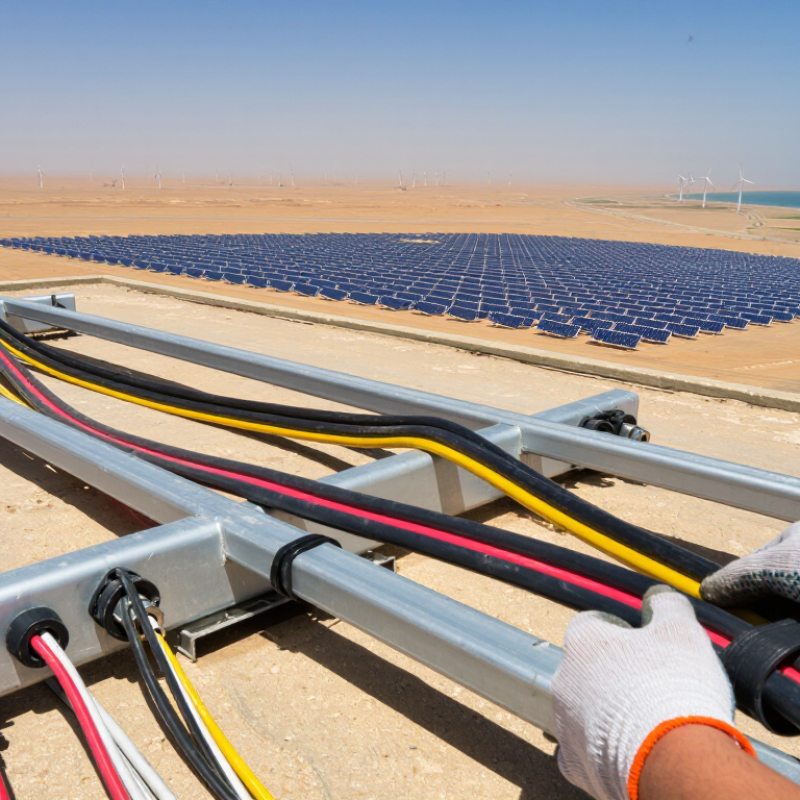
Understanding Solar Wire Types and Their Roles in Global Projects
Solar wire is not one universal product. It connects modules, combiner boxes, inverters, batteries, and the grid. Each section faces different electrical and environmental stress. The IEA PVPS Trends in Photovoltaic Applications 2024 reported over 456 GW of new photovoltaic capacity in 2023. That scale makes small wiring decisions significant.
For module strings, single-core copper wire with cross-linked insulation is widely selected. It handles ultraviolet exposure, moisture, and repeated temperature changes. Choose the conductor size by current, installation length, ambient temperature, and allowable voltage drop. Larger conductors reduce losses, but they increase cost and bending difficulty. Aluminum can suit long feeder routes, yet it needs suitable terminations and careful corrosion control. AC output cables require different ratings and insulation structures than DC solar wires. Check compatibility with the system voltage and connectors.
Standards matter.
IEC 62930 and EN 50618 provide useful requirements for photovoltaic cables, including insulation, durability, and voltage ratings. However, compliance marks do not replace site assessment. A cable passing a laboratory test may still suffer under rooftop heat, desert dust, or coastal salt. IRENA reported global renewable capacity reached 3,870 GW in 2023, showing how varied project environments have become. A tidy selection table can still be wrong. Recheck routing, cable support, bend radius, and thermal derating before procurement. Small oversights often appear months later.
Evaluating Voltage, Current, and Environmental Requirements
Choosing solar wire for a global project starts with electrical reality, not catalog appearance. The IEA PVPS Trends 2024 report recorded more than 400 GW of new photovoltaic capacity in 2023. Higher system voltages can reduce current and copper losses, but insulation ratings must match the array and inverter design. IEC 62548 recommends checking maximum operating voltage, short-circuit current, and temperature-adjusted values before cable selection. A wire that works in a mild warehouse may fail on a rooftop at 70°C.
Current capacity also changes with installation conditions. Bundled cables, conduit, rooftop surfaces, and poor airflow increase heat. Apply the relevant derating factors under IEC 60364-5-52, then verify voltage drop across the actual route length. Keep it practical. A long string circuit may lose more energy than expected when small conductors meet high ambient temperatures. IEA PVPS Task 13 reports typical photovoltaic module degradation near 0.5% annually, reminding engineers that long-term electrical margins should not be treated as optional.
Environmental exposure requires equal attention. IEC 62930 and EN 50618 address halogen-free, cross-linked cables designed for photovoltaic service, including resistance to ultraviolet radiation, ozone, and heat. Coastal sites may require stronger protection against salt and moisture; desert sites demand abrasion resistance and careful connector sealing. Field inspections often reveal damaged insulation near sharp metal edges. That detail is easy to miss. Cable calculations can also be imperfect when local weather data is incomplete, so conservative assumptions and documented site measurements remain valuable.
Comparing Insulation Materials, Conductor Metals, and Cable Designs
Choosing solar wire for global projects requires more than checking voltage and current ratings. Field experience shows that insulation often determines service life. Cross-linked polyolefin handles heat, sunlight, and cold better than many general-purpose plastics. It also resists moisture and common installation chemicals. Pay attention to flexibility. A stiff jacket can crack after repeated bending near rooftop junction boxes. That detail is easy to miss.
Conductor metal affects losses, weight, and installation effort. Copper offers high conductivity and reliable crimp performance, but it adds cost and mass. Aluminum is lighter and can reduce material use, yet it needs compatible terminals and careful oxide control. Poorly prepared connections may heat under load. Measure, do not assume. For long cable runs, calculate voltage drop at the expected operating temperature, not only at room temperature. A few extra milliohms can become meaningful across a large array.
Cable design should match the site, not merely the datasheet. Double insulation improves protection where cables face abrasion, water, or rooftop movement. Stranded conductors support routing around rails and inverters, while thicker strands may resist mechanical damage. Select suitable outer diameters for clips and glands. An oversized cable may fit poorly; an undersized one may pull from its connector. I have seen installation schedules favor the cheapest option, then pay more for replacement labor. Still, no design is perfect. Review bend radius, connector compatibility, fire behavior, and regional certification requirements with a qualified engineer before procurement.
Checking International Standards, Certifications, and Installation Codes
How to Choose the Right Solar Wire for Global Projects?
Global solar deployment makes cable compliance more important. The IEA Photovoltaic Power Systems Programme reported 456 GW of new solar capacity in 2023. That growth increases pressure on procurement teams and installers. A suitable wire must match the project’s voltage, temperature, ultraviolet exposure, moisture, and mechanical conditions. IEC 62930 supports electric cables for photovoltaic systems. EN 50618 is widely referenced for flexible solar cables in European projects. These standards are similar, but they are not interchangeable.
Certification is only one checkpoint. Installation codes also control conductor sizing, routing, grounding, and fire protection. In the United States, NEC Article 690 affects photovoltaic wiring design. European projects may require national adaptations and construction-product rules. Ask for complete test reports, not only a certificate number. Check continuous temperature ratings, insulation thickness, bend performance, and connector compatibility. Small differences matter.
Tips: Build a country-by-country compliance table before purchasing. Record the required standard, cable marking, conductor size, and testing authority. Confirm whether the installer’s method matches the approved design. Field teams sometimes discover that a compliant cable still fails because the connector, conduit, or bend radius was overlooked. That is a useful warning. Standards reduce risk, but careful installation remains decisive.
How to Choose the Right Solar Wire for Global Projects?
A comparison of selected photovoltaic cable standards by their highest stated DC voltage class. Always verify the exact cable marking, conductor size, insulation type, environmental rating, and local installation requirements before specification.
IEC 62930
Photovoltaic cables with cross-linked insulation and sheath, commonly specified for systems up to 1.5 kV DC.
EN 50618
European photovoltaic cable standard for H1Z2Z2-K cables, commonly rated up to 1.5 kV DC.
UL 4703
Photovoltaic wire standard covering several voltage classes, with available constructions up to 2.0 kV DC.
Installation Codes
NEC Article 690 and AS/NZS 5033 define installation rules; they do not replace the cable product standard or certification.
Reference framework: IEC 62930, EN 50618, UL 4703, NEC Article 690, and AS/NZS 5033. Voltage values show the highest referenced class in this comparison, not a universal approval for every cable design.
Selecting the Right Solar Wire for Climate, Distance, and Project Scale
Selecting the right solar wire means matching climate, distance, and project scale. In hot deserts, cable insulation must withstand high temperatures, ultraviolet exposure, and dust. In coastal areas, moisture and salt require stronger environmental protection. IEC 62930 specifies requirements for photovoltaic cables up to 1,500 V DC. It is a useful technical baseline, but local electrical codes still matter. IRENA’s Renewable Capacity Statistics 2024 recorded 1,419 GW of global solar capacity at the end of 2023. The scale is enormous.
Distance changes the decision. A 1,000-meter cable route can create serious voltage loss, especially with undersized conductors. Engineers should calculate current, resistance, ambient temperature, cable grouping, and allowable voltage drop together. Larger conductors may reduce losses, but they increase weight, installation effort, and cost. Aluminum can help on long routes, though termination quality becomes more demanding. A neat spreadsheet is not enough. Field conditions often disagree with it.
Tips: Check the hottest expected operating temperature, not only the air temperature. Confirm UV, water, and flame performance through test documentation. For large plants, separate string, array, and main collection circuits before choosing sizes. IEA PVPS Trends 2024 reported roughly 407 GW of new PV capacity in 2023, showing why standardized, traceable cable selection matters. Still, I would revisit every assumption after a site survey. Dust, routing changes, and poor connectors can undermine a technically correct design.
Conclusion
Choosing the right Solar Wire is essential for the safety, efficiency, and long-term reliability of global photovoltaic projects. Different wire types serve different roles, from connecting solar modules and inverters to carrying power across long distances. Selection should begin with the system’s voltage and current requirements, followed by an assessment of temperature, moisture, ultraviolet exposure, chemicals, mechanical stress, and installation conditions. These factors help determine the appropriate insulation, conductor material, flexibility, and cable structure.
Project teams should also review applicable international standards, certifications, and local installation codes before making a final decision. Copper and aluminum conductors may offer different advantages depending on cost, conductivity, weight, and distance. Climate, cable length, power capacity, and project scale all influence voltage drop, durability, and maintenance needs. By evaluating these technical and environmental conditions together, developers can select a Solar Wire solution that supports dependable energy transmission and stable performance throughout the project’s service life.

 Laurence