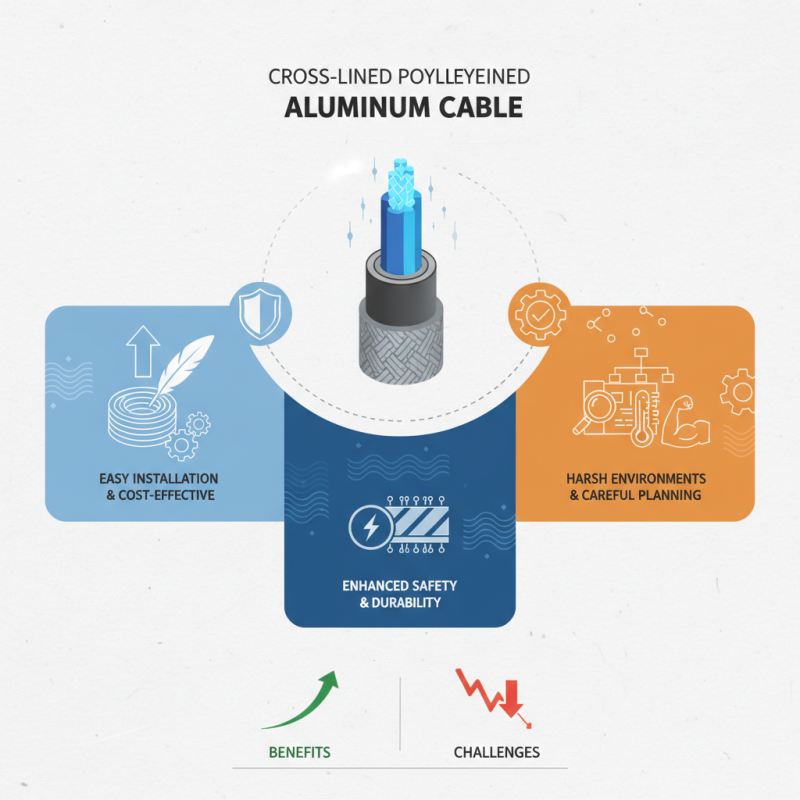
In today's industrial landscape, choosing the right materials for electrical projects is crucial. One noteworthy option is the Xlpe Aluminum Cable. This cable combines the benefits of aluminum with advanced cross-linked polyethylene, offering superior performance in various applications. Its lightweight nature makes installation easier and more cost-effective.
Moreover, the Xlpe Aluminum Cable boasts exceptional insulation properties. This feature enhances safety and reduces the risk of electrical failures. Projects that require durability and resistance to harsh environments will find this cable particularly advantageous. However, it is important to consider factors such as temperature and mechanical stress during usage.
While the benefits are evident, challenges exist. Understanding the specific requirements of each project is essential to maximize the potential of Xlpe Aluminum Cable. Not all applications will suit this type of cable perfectly. Careful assessment and planning can lead to better outcomes.
Xlpe aluminum cables are gaining traction in electrical projects due to their numerous benefits. These cables feature a cross-linked polyethylene (XLPE) insulation, which significantly improves durability. Reports indicate that XLPE insulation enhances the cable's thermal resistance by up to 90°C, making it suitable for various environments.
Moreover, aluminum cables are lighter than copper options. This characteristic simplifies handling and installation, resulting in reduced labor costs. According to industry data, aluminum cables can reduce weight by approximately 70% compared to copper. This weight advantage does not compromise electrical performance, as aluminum maintains excellent conductivity.
Tips: When choosing cables, consider the installation environment. Factors such as temperature and moisture levels can impact cable longevity. Always verify the insulation type to ensure optimal performance over time.
Despite their many advantages, there are some challenges to using XLPE aluminum cables. The connection process may require more attention compared to traditional options. Ensuring proper joint termination is crucial to avoid overheating. Regular inspections and maintenance can help mitigate potential issues over time.
| Benefit | Description |
|---|---|
| Lightweight | Xlpe aluminum cables are lighter than copper cables, which makes them easier to handle and install. |
| Cost-Effective | Aluminum cables are generally more affordable than copper, providing significant cost savings for large projects. |
| Corrosion Resistance | The XLPE insulation provides excellent resistance to corrosion and environmental factors, enhancing the durability of the cables. |
| High-Temperature Resistance | XLPE insulation can withstand higher temperatures, making it suitable for various industrial applications. |
| Improved Electrical Performance | XLPE aluminum cables can offer better conductivity and reduce energy losses in electrical systems. |
| Flexibility | These cables are more flexible than other materials, allowing for easier installation in tight spaces. |
: XLPE aluminum cables can reduce costs by up to 30% compared to copper options. This is significant for large projects.
XLPE insulation allows for higher current capacity and better resistance to environmental factors. This leads to reduced maintenance costs.
Assess both initial and long-term costs, including installation expenses and energy efficiency. Research reliable performance data.
Their lightweight design decreases installation time and reduces physical strain on workers. This can also cut labor costs by 30%.
Yes, they can bend and twist without compromising performance, making them suitable for dynamic environments.
Improper installation can negate cost benefits. Always follow guidelines and check for wear during regular inspections.
Regular inspections can identify wear or fatigue early. This ensures cables remain effective and reliable over time.
Proper maintenance and installation practices significantly impact their longevity and performance reliability.
Flexibility allows routing through tight spaces and reduces damage risk during installation, enhancing overall efficiency.
If not handled or installed properly, the advantages of flexibility and cost savings can be lost. Planning is essential.
Xlpe Aluminum Cable is increasingly favored in electrical projects due to its numerous benefits that enhance both performance and cost-effectiveness. One of the significant advantages is its enhanced durability and longevity, which ensures a longer lifespan compared to traditional cables. Additionally, Xlpe Aluminum Cable demonstrates superior performance in harsh environmental conditions, making it suitable for various applications where resilience is essential.
Furthermore, the lightweight and flexible design of Xlpe Aluminum Cable solutions simplifies installation and handling, further contributing to its cost-effectiveness. These features make Xlpe Aluminum Cable an excellent choice for projects requiring reliable and efficient electrical solutions, ultimately leading to better overall performance and reduced maintenance costs.

 Laurence